









TikTok Gives Creators More Control Over Keyword Metadata: What It Means for Social Search
TikTok Gives Creators More Control Over Keyword Metadata: What It Means for Social Search
Mastering TikTok Keyword Metadata: The Complete Guide to Creator Control and Social Search
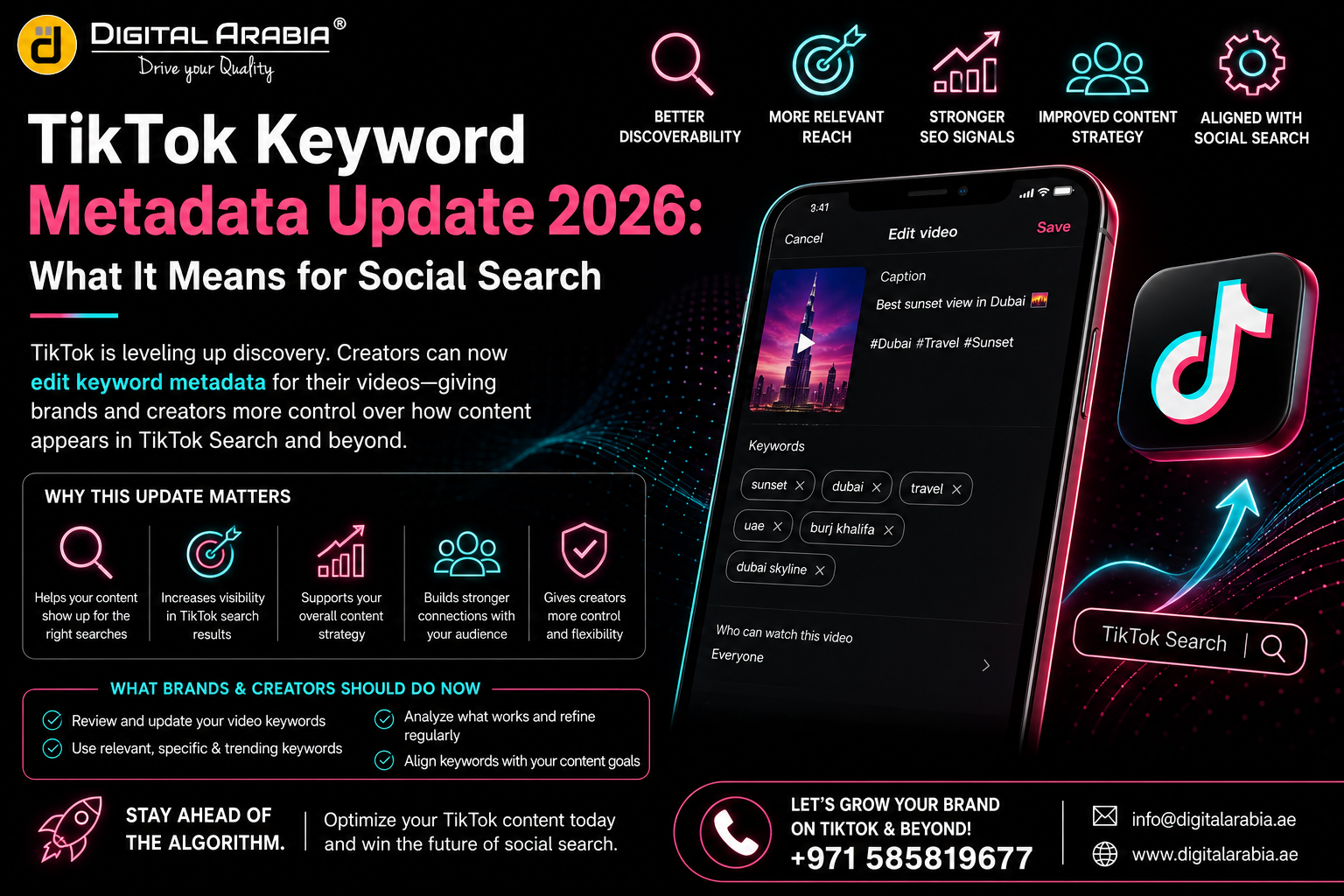
TikTok has quietly transformed from a viral entertainment feed into one of the most influential search engines of the past decade. As the platform continues to roll out tools that give creators more explicit control over how their content is indexed, understanding TikTok keyword metadata is no longer optional — it is the new foundation of growth for influencers and brands alike. This deep dive explains what the metadata update really changes, how to integrate it into a sustainable content workflow, and why AI-powered influencer platforms like KOL Find are already using keyword intelligence as a core signal in influencer content optimization.
Understanding TikTok Keyword Metadata and Creator Control
What TikTok Keyword Metadata Actually Covers
TikTok keyword metadata isn't a single field. It's a constellation of signals spread across your video's text and audio layers. In practice, the core elements include:
- Captions and descriptions: The primary text block where creators naturally describe what a video shows.
- Hashtags: Still relevant, but increasingly functioning as topic classifiers rather than standalone discovery drivers.
- Dedicated keyword fields: Explicit spaces where creators can declare the search terms they want their content to match.
- On-screen text and overlays: Text rendered into the video itself, which TikTok's optical character recognition systems can read.
- Audio transcripts: The spoken words in your video, transcribed and indexed for semantic matching.
Each of these feeds into TikTok's understanding of what your content is actually about. A common mistake is treating them as independent elements rather than one unified metadata profile. When we implement keyword strategies for production teams, we always map the caption, hashtags, and on-screen text to a single primary keyword cluster. If those layers contradict one another, the algorithm receives mixed signals — and the video loses relevance in every downstream surface, from search results to For You recommendations.
How Creator Control Changes the Metadata Landscape
What does "more control" actually mean for creators? Historically, TikTok relied heavily on engagement signals — watch time, shares, comments — to infer a video's meaning. The platform's algorithm watched how people behaved with content and filled in the gaps. The keyword metadata update shifts that equation by letting creators declare intent directly at publish time.
Think of a beauty video. The algorithm might visually infer "makeup tutorial," but the creator knows the video is specifically about "dermatologist-recommended foundation for sensitive skin." With explicit metadata control, the creator can encode that long-tail intent directly, correcting how the content is classified and ensuring the right user finds it. This reduces misclassification, and it also raises the stakes: content that is vague, clickbait-driven, or contradictory in its metadata will likely be de-prioritized, because the search system now places more weight on explicit metadata that must match the actual video content.
Why TikTok Social Search Is Becoming a Discovery Engine
From Hashtags to Intent-Based Queries
A few years ago, TikTok discovery was primarily hashtag browsing. Users tapped a tag, scrolled through a chronological feed of similar content, and hopped to another tag. That behavior has largely been replaced by intent-based queries. Users now type full questions into TikTok search: "best budget phone 2025," "how to fix a leaking faucet," "where to travel instead of Santorini." The official TikTok Newsroom has consistently highlighted search as a growing part of how people use the platform, and the broader market data agrees — younger audiences increasingly treat TikTok as a vertical search engine that competes with Google for short-form discovery.
For creators, the takeaway is straightforward: your content must be optimized for queries, not just topics. A video built around a trend hashtag might earn temporary visibility, but a video built around a durable search query earns compounding discovery over time.
How TikTok Keyword Metadata Affects Search Relevance
TikTok's search ranking algorithm combines three broad signal groups: text relevance (what your metadata says), engagement quality (how users interact), and personalization (who the user is). Metadata is the only one of the three that creators can directly control at the moment of publishing. That makes it the highest-leverage input in your entire discovery strategy.
When a user searches for "home workout for beginners," TikTok cross-references the query against a video's embedded metadata to identify candidate matches, then ranks those candidates using engagement velocity and completion rates. Videos with well-structured metadata pick up early momentum because the search system understands them from the first minute, before significant engagement data exists. Without that initial metadata clarity, even a genuinely useful video can stall because the algorithm simply doesn't know what it is.
TikTok Creator SEO: What the Update Means for Creators
Mapping Content to User Intent
Creators now have to think like SEO professionals. That begins with research: what is your audience actually typing into TikTok search? Not just tracking trending hashtags, but understanding the questions your niche community asks. A creator publishing meal prep content should target queries like "cheap healthy meal ideas for students" or "meal prep for weight loss on a budget," not just the generic term "food."
When implementing this, the discipline is to treat every video as a solution to a specific query. Before you shoot a single frame, write down the search query you want to win. Every subsequent decision — the caption, the spoken script, the on-screen text — should reinforce that query. This approach, documented in the Google SEO Starter Guide in the context of web content, applies increasingly well to TikTok creator SEO: match content exactly to what users seek, and you earn both traffic and trust.
Optimizing Videos for TikTok Social Search
Here is a practical framework we walk creators through when auditing their videos:
- Write the caption around a natural-query structure rather than a clever one-liner.
- Place the target keyword in the first sentence, since TikTok search snippets display the opening of the caption.
- Speak the keyword aloud in the video. Audio transcripts are indexed, which gives you a second metadata layer free of charge.
- Add on-screen text overlays that echo the keyword, reinforcing both human understanding and OCR extraction.
This layered technique is exactly why influencer content optimization is more than choosing the right publisher. It requires designing content where every channel — audio, text, and visual — points to the same search intent.
Strategic Implications for Influencer Content Optimization
Why Brands Must Rethink Influencer KPIs
For brands, the rise of TikTok social search changes which creators deserve investment. Legacy KPIs like follower count and average view count say very little about a creator's ability to be discovered for relevant queries. A creator with 50,000 followers who consistently ranks at the top of TikTok search for "organic skincare routine" is arguably more valuable than a creator with 500,000 followers who only entertains the For You feed.
Keyword metadata is now a useful proxy for strategic thinking. Creators who take the time to research keywords and structure their metadata are signaling that they treat their content as a discoverable asset. That mindset directly aligns with what brands need in a long-term partner, especially as platforms like the TikTok for Business platform increasingly push brands toward search-connected campaigns.
Using AI to Identify Creators Who Master TikTok Social Search
This is where platforms like KOL Find enter the picture. KOL Find is an AI-powered influencer discovery and evaluation platform that helps brands identify creator partners across TikTok, Instagram, and YouTube. What distinguishes it from simple directory tools is its underlying data engine: it analyzes millions of data points per creator — audience demographics, engagement patterns, content signals, and keyword usage — to determine who is genuinely positioned for sustained visibility.
For brands, this means moving beyond the question "who is popular?" and asking "who shows up when our target customer searches?" KOL Find helps answer that by matching brands with creators whose content demonstrates strong TikTok social search fundamentals, including metadata alignment, rather than merely attention-grabbing charisma. The platform allows you to filter by niche, audience, and performance signals, then export data to support your influencer selection decisions.
Best Practices for TikTok Keyword Metadata
Researching High-Intent TikTok Keywords
Keyword research on TikTok differs meaningfully from classic SEO research. Standard web tools capture search volume for queries, but TikTok searches are conversational, shorter, and heavily intent-driven. Practical research methods include using TikTok's auto-suggest in search, studying competitors' top-ranking videos for target terms, and mining comment sections, where users reveal the exact phrasing they use to search.
Long-tail variations are especially valuable. The phrase "15-minute high protein breakfast" is a far better content target than "breakfast," because it maps to a specific, measurable user need. Voice-search phrasing also matters: users type questions like "how do I start a podcast" into TikTok, so structuring content around question-based keywords captures that demand.
Placing Metadata Across Captions, Tags, and Audio Transcripts
Consistency is the rule. Apply keywords in natural language throughout the caption. In hashtags, include one or two broad tags plus a few long-tail variations tied to your primary topic. And when writing your script, include your target phrase in natural spoken language, since the transcript reinforces your written metadata.
A good caption structure looks like this:
- First sentence: the target search query, written naturally.
- Supporting detail: a description of the video content that includes semantic variations.
- Call to action: an invitation to comment or save, which boosts engagement signals.
Avoiding Over-Optimization While Expanding TikTok Social Search Reach
There is a real tension between discoverability and creativity. The examples that perform best integrate keywords so naturally that the metadata never calls attention to itself. A recipe video captioned "How to make spicy garlic noodles in 10 minutes" is both optimized and authentic. Forcing every keyword variant into the caption — "10-minute spicy garlic noodle easy dinner recipe quick" — reads as spam and damages trust.
Striking that balance means your metadata should always describe what the viewer actually sees and hears, not what you hope to be found for. The algorithm will eventually compare metadata against engagement behavior; if the content fails to deliver on the promise, the video gets demoted.
Common Pitfalls to Avoid
Keyword Stuffing and Irrelevant Tags
The most common mistake in TikTok creator SEO is keyword stuffing. Creators chasing "how to get more views" content often pad their captions with every loosely related hashtag, resulting in metadata that reads like a scrambled list. This harms both user trust and algorithmic confidence. Search systems compare metadata against engagement time; when a viewer leaves in the first few seconds, the mismatch is flagged.
Ignoring Search Intent
Targeting a popular keyword that does not match your content is equally destructive. A travel creator who uses #travel and #adventure on every video regardless of topic eventually loses relevance because the metadata is inconsistent with what the videos actually show. Relevance is built on specificity, not volume.
Overlooking Localized and Niche Keywords
Many creators ignore regional dialects and niche vocabulary. A beauty creator using only "skincare" while her audience searches "skincarerutine" or "glass skin for oily face" misses a significant portion of search demand. There is real opportunity in researching localized terms, cultural phrases, and community-specific shorthand that standard keyword tools overlook.
Real-World Implementation: Lessons from Production Content
A Framework for Aligning Content Calendars with Search Demand
Creating content purely from creative inspiration is the old model. A search-first content calendar starts by identifying recurring audience questions, seasonal trends, and gaps in competitor coverage. For a food brand, that might mean mapping "25-minute dinner recipes" to weeknight content and "healthy summer barbecue ideas" to June. Each month, review TikTok search insights and keyword trends, then build your content briefs around the top opportunities.
Measuring the Impact: Metrics for TikTok Creator SEO
After implementing keyword metadata, you need to verify that it works. The metrics that matter include:
- Search impressions: How often your content appears in TikTok search results.
- Search-driven traffic: Views that originated from the search surface.
- Save rate: Users saving your video for later, a strong relevance signal.
- Post-view search behavior: Whether users are engaged enough to search for more content from your profile.
These metrics matter more than raw view counts because they directly show whether your metadata aligns with user intent. Monitor them in TikTok Analytics to confirm whether adjustments to your keyword strategy are paying off.
Case-Style Scenarios: Applying Metadata Control in Practice
Consider a travel advisor who shifted from aesthetic captions to query-based captions. The new caption structure started with the exact search prompt her audience would use — "best affordable weekend trips for couples" — followed by descriptive detail. Over the following month, TikTok search impressions for her account grew noticeably, with visible increases in profile visits from search results.
A fitness trainer similarly restructured captions around phrases like "lower back pain stretches" and saw search-driven traffic become a larger share of total views. These examples illustrate a replicable pattern: clarify your metadata, align with audience intent, and let TikTok's algorithm handle the rest.
Industry Best Practices and Expert Perspectives
What Social Media Experts Say About TikTok Social Search
Industry commentary increasingly points to TikTok social search as the next major content surface. The TikTok Newsroom and other official channels emphasize how users now rely on search for recommendations, how-to guides, and product discovery. The consensus among social media strategists is clear: creators who treat search intent as a core part of their workflow will have a compounding advantage over those who rely solely on algorithmic luck.
How Brands Can Build Authority Through Transparent Metadata
The E-E-A-T framework that Google applies to web content has found its way into social media strategy. Honest keyword metadata tells TikTok exactly what your content is about, builds trust with audiences, and demonstrates that your brand delivers on its promises. There is also a strong brand safety dimension: transparent metadata helps platforms categorize content correctly, which matters for advertisers who want predictable placement contexts.
Technical Deep Dive: Under the Hood of TikTok's Keyword Metadata
Structured Metadata vs. Unstructured Content Signals
To understand the technical mechanics, it helps to separate structured metadata from unstructured signals. Structured metadata is explicit: the caption text, hashtags, keyword fields, and alt/display text that creators control. Unstructured signals are inferred: watch time, rewatches, shares, completion rate, and visual content analysis performed by machine learning models.
TikTok's search ranking likely combines both in a two-stage process. A first pass uses structured metadata to filter candidate videos down to a relevant subset. A second pass re-ranks those candidates using unstructured engagement signals. If your metadata is poor, the second stage never happens. If your metadata is good but your content fails to hold attention, you lose ranking in the re-rank stage.
| Signal Type | Examples | Creator Control |
|---|---|---|
| Structured | Captions, hashtags, keyword fields, title/display text | Full control at publish time |
| Unstructured | Watch time, shares, comments, rewatch rate, OCR of on-screen text | Indirect control via content quality |
How Personalization and Metadata Interact
TikTok serves search results through a recommendation layer. Each user's search results are personalized to their interest graph, region, and past behavior. Metadata helps the algorithm determine which queries your content should match, while personalization determines which users see those matches. A cooking video with Spanish-language metadata may rank higher for Spanish-speaking users in a specific region, even if the video itself relies heavily on visual demonstration rather than dialogue.
The Hidden Role of Metadata in Future Ad Targeting
Looking ahead, structured metadata is likely to become a primary input for ad targeting and brand safety controls on TikTok's developer and business platforms. If a brand wants to place an ad adjacent to content about "sustainable fashion," a creator's metadata profile could determine campaign eligibility. This gives explicit keyword strategy an ROI that extends far beyond organic search — it becomes the foundation of future monetization opportunities.
Trust and Performance Considerations
Pros and Cons of Greater Keyword Metadata Control
The upside of the metadata update is clarity: better discoverability, more accurate matching, and a fairer playing field for creators who invest in search strategy. The downside is the potential for over-optimization and algorithmic misunderstanding. Creators may feel pressure to load every field with keywords, producing metadata that contradicts the actual content. TikTok's safeguards will likely favor consistency, which rewards honest creators and penalizes manipulation.
When to Use TikTok Keyword Metadata (and When Not To)
Metadata effort should be proportional to the content's expected lifespan. For durable, evergreen content — tutorials, product reviews, educational explainers — keyword strategy is essential. For opportunistic, trend-driven content with a shelf life of a few days, focus on speed and immediate visual appeal. Minimal metadata is acceptable when engagement is driven by the cultural moment rather than by search.
Building Long-Term Trust with Audiences and Platforms
The long-term winners in TikTok social search will be those who treat metadata as a component of content quality, not a hack. Creators who commit to transparent, keyword-accurate practices will compound their search authority over time. KOL Find's AI-driven matching already looks for those trust signals — consistency, topic authority, and metadata discipline — helping brands connect with creators who build lasting reach rather than temporary virality.
As TikTok social search continues to mature, the creators and brands that invest in TikTok keyword metadata, intent alignment, and honest discovery strategies will define the next era of short-form video. The question is no longer whether search-first content creation will become the norm. It is simply who adopts the practice first.
This article was published via SEOMate
Related Articles
TikTok Gives Creators More Control Over Keyword Metadata: What It Means for Social Search - Updated Guide
news-coverage
TikTok Gives Creators More Control Over Keyword Metadata: What It Means for Social Search
news-coverage
Is AI Making It So Anyone Can Run Effective TikTok Ads?
analysis
Why YouTube Views Are Higher: The Impact on Your EMV and ROI
analysis

Creating a Video Series: Why Your Business Needs One
how-to-guide

How Dijksman Communicatie chose 11 creators for BYD with Stellar
analysis