








YouTube Retention Strategy: How to Hook, Hold, and Convert Viewers
YouTube Retention Strategy: How to Hook, Hold, and Convert Viewers
YouTube Influencer Retention Strategy: The Complete Deep-Dive for Higher KOL Performance
A YouTube influencer retention strategy is the difference between a campaign that gets seen and one that gets remembered. Views and subscriber counts still matter, but they are not enough. In a market where every brand can buy reach, retention is the metric that connects audience attention, algorithmic distribution, and actual brand conversion. This deep-dive explores how brands and creators can build a retention-first system around the Hook-Hold-Convert framework, using data-backed decisions, platform signals, and smarter KOL matching.
1. Why Retention Is the Core of a YouTube Influencer Retention Strategy
Reach gets viewers into the video. Retention keeps them there. Conversion turns that attention into action. If a creator has massive reach but viewers leave after 15 seconds, the brand pays for impressions that never had a chance to influence anyone. A strong YouTube retention strategy treats attention as a limited resource: every second must earn the next second.
The Difference Between Reach, Retention, and Conversion

Reach is the size of the audience exposed to a video. Retention is how long that audience stays and how much of the message they absorb. Conversion is what they do afterward: click, subscribe, request a demo, or buy. In influencer campaigns, these three metrics often pull in different directions. A viral prank might maximize reach but dilute brand recall. A niche tutorial might have lower reach but much higher retention and conversion. The goal is not to worship one metric; it is to align them with the campaign objective.
How YouTube’s Algorithm Rewards Viewer Retention
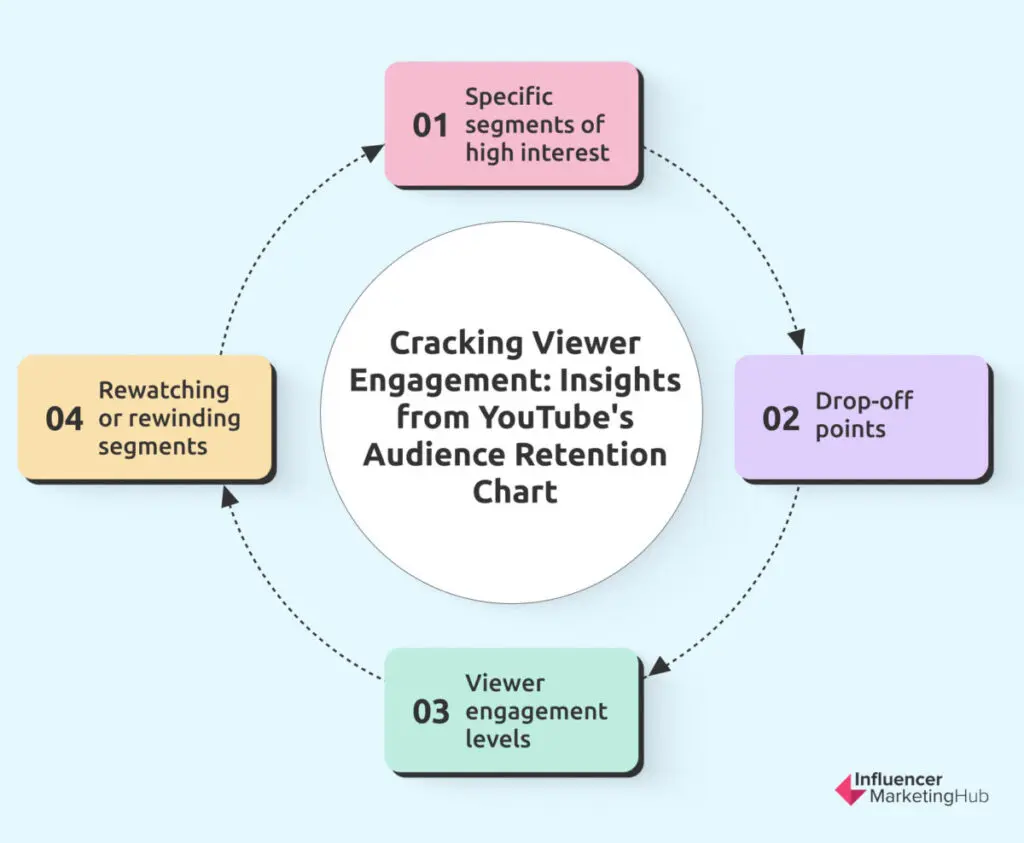
YouTube’s recommendation system does not simply count views. It watches average view duration, absolute retention, session watch time, and satisfaction signals such as likes, comments, shares, and surveys. When viewers stay through a video, YouTube interprets that as relevance. When they leave early, the system may reduce future recommendations. This is why a YouTube influencer retention strategy is also an algorithmic strategy. A video that holds attention can keep earning impressions days or weeks after publishing.
Why Brands Need a YouTube Influencer Retention Strategy

For brands, retention is tied directly to message recall, trust, click-through rate, and sales. A viewer who watches a full product demo is far more likely to remember the product name than someone who skipped after the intro. KOL Find, an AI-powered KOL matching platform, analyzes millions of data points to identify creators whose audiences actually stay. That matters because follower count alone cannot predict whether a KOL can hold attention long enough to deliver a brand message.
2. The Hook-Hold-Convert Framework for YouTube KOL Content Performance
The Hook-Hold-Convert framework maps viewer psychology to platform metrics and campaign goals. It gives brands and creators a shared language for diagnosing YouTube KOL content performance. Instead of asking “Was the video good?” teams can ask “Did the hook work, did the hold sustain, and did the convert drive action?”
What “Hook, Hold, Convert” Means in Practice

The hook is the first 30 seconds. It earns the viewer’s decision to stay. The hold is the middle section. It sustains attention through structure, pacing, and payoff. The convert is the desired action after value has been delivered: a click, subscription, lead, or sale. Each stage has different success criteria.
Mapping Retention Metrics to Each Stage

| Stage | Viewer psychology | Primary metrics | KOL strength |
|---|---|---|---|
| Hook | Curiosity, relevance, clarity | 30-second retention, intro drop-off | Fast pacing, strong opening |
| Hold | Trust, interest, momentum | Average view duration, retention curve stability | Storytelling, teaching, editing |
| Convert | Motivation, proof, timing | CTR, conversion rate, assisted sales | Trust, authenticity, CTA delivery |
Choosing the Right KOL for Each Stage
Some creators excel at hooks. They open with energy, visual momentum, and a bold promise. Others are better at holding attention through long-form reviews, tutorials, or vlogs. A smaller group converts naturally because their audience trusts their recommendations. KOL Find helps match brand objectives to KOL strengths rather than forcing every creator into the same campaign template.
3. Hook: Winning the First 30 Seconds with a Strong YouTube Retention Strategy
The first 30 seconds are brutal. Viewers decide quickly whether the video deserves their time. They scan for relevance, novelty, and promise clarity. If the intro feels slow, over-branded, or disconnected from the thumbnail, they leave. A strong YouTube retention strategy treats the opening as a contract: here is what you will get, and here is why it matters now.
The Psychology of Viewer Drop-Off in the First 30 Seconds
Drop-off is driven by curiosity gaps, relevance signals, visual momentum, and promise clarity. A curiosity gap makes viewers ask a question they want answered. Relevance signals tell them this video is for people like them. Visual momentum shows that something is happening. Promise clarity tells them the payoff. When any of these are missing, the viewer’s brain classifies the video as optional.
Hook Formats That Work Across YouTube, TikTok, and Instagram
| Format | Best for | Risk |
|---|---|---|
| Cold open | High-energy creators | Can confuse new viewers |
| Bold claim | Reviews, commentary | Must be defensible |
| Problem-first framing | Tutorials, SaaS | Needs fast payoff |
| Pattern interrupt | Entertainment, shorts | Can feel gimmicky |
Aligning the Hook with Audience Intent and KOL Voice
A hook must fit both the platform and the creator’s natural style. A calm educator can use a slow-burn hook if the audience expects depth. A fast-paced reviewer cannot fake calm authority without losing authenticity. KOL Find’s matching surfaces KOLs whose hook style aligns with brand messaging, which reduces the friction between sponsorship and creator voice.
Common Hook Mistakes That Kill YouTube KOL Content Performance
Delayed intros, over-branding, misleading claims, and slow pacing are the biggest killers. A 20-second animated logo may feel premium to the brand, but it often feels like a toll booth to the viewer. Misleading claims may boost initial retention but damage trust and long-term channel health.
4. Hold: Sustaining Attention with YouTube KOL Content Performance Insights
Once the hook lands, the hold determines whether the video earns its runtime. The middle is where retention graphs reveal the truth. Brands and creators should study open loops, pattern interrupts, and pacing. A video can have a great first 30 seconds and still collapse at minute three if the structure sags.
Structuring the Middle: Open Loops, Pattern Interrupts, and Pacing
Open loops introduce questions that are answered later. Pattern interrupts reset attention through location changes, visual effects, or tonal shifts. Pacing controls how quickly value is delivered. The best YouTube KOL content performance often comes from sequencing payoff moments every 30 to 60 seconds, especially in sponsored segments.
Reading Retention Graphs to Diagnose Drop-Off
Retention graphs show spikes, flatlines, and steep drops. A steep drop after the intro suggests a hook mismatch. A flatline in the middle may mean the content is predictable. A late drop before the CTA may mean the conversion ask feels premature. A hidden insight is “retention debt”: when a creator attracts an audience through one topic but switches to another, the mismatch accumulates and eventually shows up as drop-off.
Matching Content Format to KOL Strengths
Long-form reviews, tutorials, vlogs, and challenges affect hold rate differently. Tutorials often retain viewers who want completion. Vlogs retain through personality and narrative. Challenges retain through suspense. A brand must match the format to the KOL’s strength, not the other way around.
How KOL Find Evaluates YouTube KOL Content Performance
KOL Find uses data points such as audience retention curves, engagement quality, comment sentiment, and historical sponsored content performance to assess whether a creator can sustain attention for a brand’s message. This goes beyond subscriber count and gives campaign teams a more realistic forecast.
5. Convert: Turning Retained Viewers into Action with Brand YouTube KOL Matching
Conversion is not always a sale. It can be a click, subscription, lead, demo request, or add-to-cart. The mistake is defining conversion after the creative is produced. A retention-first campaign defines the desired action before the brief is written.
Defining Conversion on YouTube: Clicks, Subscriptions, Leads, Sales
Different goals require different CTAs. Awareness campaigns may optimize for view-through rate and brand recall. Consideration campaigns may optimize for clicks and comments. Performance campaigns may optimize for promo codes, affiliate links, or demo requests. The definition shapes the hook, hold, and convert structure.
CTA Placement and Cadence Without Hurting Retention
Native CTAs, mid-roll placement, verbal cues, and end-screen strategy all affect retention. A mid-roll CTA works when the viewer has already received value. A hard CTA too early can break trust. The best approach is often a soft verbal cue, a visual demonstration, and a clear end-screen action.
Trust Signals: Demos, Proof, Testimonials, and Disclosure
Demos, proof, testimonials, and disclosure increase conversion while maintaining authenticity. Transparency does not kill performance; it often improves it because the audience understands the relationship. A creator who explains why they use the product is more persuasive than one who reads a script.
Brand YouTube KOL Matching for Conversion-Focused Campaigns
KOL Find matches brands with ideal KOLs who can convert without sounding like ads. The platform considers audience intent, past conversion behavior, and content style. That is especially important for performance campaigns where a single mismatched creator can waste budget.
6. How to Build a Data-Backed YouTube Influencer Retention Strategy
A data-backed strategy starts before outreach. Brands should define KPIs, audit past performance, and test creative variables before scaling. This is how a YouTube influencer retention strategy becomes repeatable rather than accidental.
Define Retention KPIs Before Outreach
Set targets for 30-second retention, average view duration, CTR, and conversion rate. For example, a tutorial campaign might target 60% 30-second retention and 40% average view duration. A short-form awareness campaign might prioritize reach and completion rate instead.
Audit YouTube KOL Content Performance in Analytics
Review past videos for retention patterns, audience geography, and traffic sources. Look for sponsored segments that caused sudden drops. Compare organic and sponsored content to see whether the creator’s audience tolerates brand messages.
A/B Test Hooks, Thumbnails, and CTAs
Treat creative elements as variables. Test one change at a time: a new hook, a different thumbnail, or a revised CTA. Small changes in the first 30 seconds often produce larger retention gains than changes in the final minute.
Use YouTube KOL Search to Find Creators with Proven Retention
Filter creators by retention strength, not just follower count. KOL Find supports this through AI-powered YouTube KOL search, helping teams identify creators whose audiences stay through sponsored segments.
YouTube Influencer Matching Criteria: Audience Overlap, Engagement Quality, Brand Safety
Audience overlap, engagement quality, and brand safety predict campaign success. A hidden insight is that audience overlap often beats raw reach. A creator with 50,000 highly aligned viewers can outperform a creator with 500,000 mismatched viewers.
7. Real-World Implementation: Retention Lessons from YouTube KOL Campaigns
Scenario 1: DTC Brand Launching with a YouTube KOL
A DTC skincare brand partnered with a hook-heavy creator for a launch. The first video had strong 30-second retention but dropped when the product demo appeared late. After moving the demo to the first minute and tying it to the hook, retention improved and trial signups increased.
Scenario 2: SaaS Brand Converting Long-Form Viewers
A SaaS brand worked with a tutorial-style KOL. The creator held attention through a step-by-step workflow, then placed the demo request after solving a real problem. The video generated fewer views than a viral competitor, but demo requests were significantly higher.
Scenario 3: Creator Re-Engaging an Existing Audience
A creator noticed a retention dip in weekly vlogs. Community feedback revealed the intro was too long and the middle lacked payoff moments. After shortening the intro and adding open loops, repeat views and session time improved.
Lessons from Production: What Changed Retention
Shorter intros, clearer promises, better pacing, and audience-matched creators consistently improved retention. The pattern was not about bigger budgets; it was about respecting the viewer’s time.
8. Advanced Techniques for Higher Retention and Conversion
Scripting for Rewatchability and Replay Value
Layered details, Easter eggs, and dense value encourage replays. Rewatchability increases session watch time and signals satisfaction to YouTube.
Editing Cadence and Audiovisual Pacing
Cut frequency, b-roll, motion graphics, and sound design are retention tools. A cut every few seconds can maintain energy, but too many cuts can feel chaotic. The right cadence matches the creator’s voice.
Community-Driven Retention: Comments, Polls, Premieres
Community interaction increases session time and loyalty. Polls, premieres, and comment-driven follow-ups give viewers a reason to return.
Repurposing High-Retention Segments Across Platforms
Turn strong YouTube moments into Shorts, TikToks, and Instagram Reels. These clips feed new viewers back to the long-form video, creating a retention loop across platforms.
9. Authority and Best Practices: What Experts and Platforms Recommend
YouTube’s Official Retention Metrics and Algorithm Signals
YouTube Studio reports average view duration, absolute retention, and audience retention curves. YouTube’s public guidance emphasizes watch time and satisfaction signals, which means creators should interpret retention alongside likes, comments, and shares.
Influencer Marketing Benchmarks for Retention and Conversion
Benchmarks vary by industry and format. Many brands treat 50–70% 30-second retention as healthy for creator-led content, but tutorials and vlogs may differ. Conversion benchmarks depend on the offer, audience temperature, and CTA strength.
How KOL Find Aligns with Platform Best Practices
KOL Find aligns with YouTube’s emphasis on watch time, relevance, and audience satisfaction. Its AI-powered matching helps brands avoid vanity metrics and focus on creators who can hold attention.
10. Trust and Risk: When a YouTube Retention Strategy Can Fail
Pros and Cons of Retention-First Influencer Campaigns
Retention-first campaigns often require higher production effort and slower scaling, but they can produce stronger long-term results. They are not ideal for every awareness sprint.
Red Flags in YouTube KOL Content Performance
Sudden drop-offs, misleading hooks, low engagement quality, and fake traffic are red flags. Brands should audit comment sentiment and traffic sources before renewing partnerships.
Brand Safety, Disclosure, and Authenticity
FTC disclosure, brand values alignment, and audience trust are non-negotiable. A retention win that damages trust is not a win.
When Not to Optimize for Retention Alone
Sometimes awareness, rapid reach, or viral spikes matter more than average view duration. A product launch may prioritize reach first and retention second.
11. Measuring Success: Benchmarks, Tools, and Iteration
Key Metrics: Average View Duration, Absolute Retention, CTR, Conversion Rate
Define each metric and prioritize by campaign goal. Awareness may prioritize absolute retention; performance may prioritize CTR and conversion rate.
Dashboard and Reporting Cadence
Use weekly, monthly, and post-campaign reporting. Weekly checks catch creative issues early. Post-campaign reports feed the next brief.
Iteration Loop: Hook, Hold, Convert, Learn
Feed insights back into creative briefs and KOL selection. The loop turns one campaign into a learning system.
Scaling Winning KOL Partnerships
Turn high-retention KOLs into repeat partners and brand ambassadors. Long-term relationships often outperform one-off sponsorships because trust compounds.
12. KOL Find Workflow for Retention-Driven YouTube Campaigns
A practical KOL Find workflow starts with the campaign goal. Define whether you need hook strength, hold strength, or conversion strength. Then search for creators with proven retention in that category. Review audience overlap, engagement quality, and brand safety. Brief the creator with retention checkpoints: first 30 seconds, mid-video payoff, and conversion moment. Measure average view duration, CTR, and conversion rate. Iterate the hook, hold, and convert stages. Scale the creators who consistently hold attention.
To put this workflow into practice, learn more about KOL Find at KOL Find. A strong YouTube influencer retention strategy is not about chasing every view. It is about earning attention, keeping it, and turning it into measurable brand action.
This article was published via SEOMate
Related Articles
How YouTube’s Algorithm Can Find Your Customers for Free
how-to-guide

What’s Making AI Impact Difficult to Measure for Marketers?
analysis
YouTube CTR, Instagram Reels Structure, and Industry News
news-coverage
Building Mini Personas to Write Content Your Target Audience Actually Wants
how-to-guide

Why Unpolished Reels Win: An Instagram Growth Strategy for Business
how-to-guide
Cyber5 Prep: Are You Ready for Paid Media’s Biggest Week?
how-to-guide