







Google Just Made Your Creators’ Posts a Search Channel
Google Just Made Your Creators’ Posts a Search Channel

KOL Search Visibility: How Google Creator Search Impact Is Reshaping Influencer Marketing
Google’s search results no longer belong exclusively to traditional websites. Over the past year, the Google creator search impact has become impossible to ignore: posts from TikTok, Instagram, and YouTube now appear directly in Google’s main results, alongside standard blue links. For anyone working in influencer marketing, this shift changes the game. KOL search visibility is no longer just about follower counts and engagement rates—it’s about whether your creators’ content can be found by people searching on Google. This deep dive explores what changed, why it matters, and how to turn creator posts into a compounding search channel.
1. Google Creator Search Impact: What Changed?

The most significant update is that Google now treats short-form video and social posts as first-class search results. Instead of forcing users to visit TikTok or Instagram separately, Google can surface a creator’s video, caption, or transcript directly in response to a query. For example, searching for “best budget espresso machine” might return a TikTok from a coffee enthusiast who tested six machines, complete with product footage and an honest verdict. That post appears alongside reviews from publications like Wirecutter or CNET, and sometimes above them.
1.1 Social Posts Now Compete in Web Search
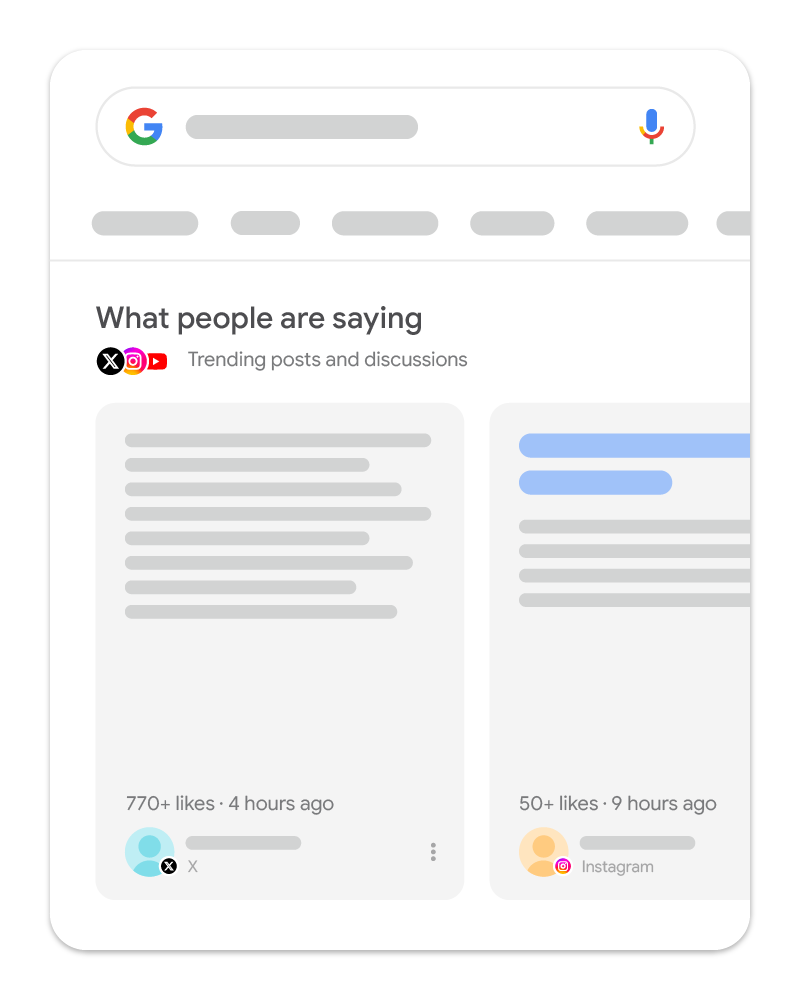
This is a structural change. Social posts are no longer ephemeral content that disappears into a platform feed after a few hours. They become indexed, searchable, and durable. A creator’s post from six months ago can keep generating impressions from Google long after its original posting date. In practice, this means creator content functions as a permanent discovery channel rather than a one-time reach play.
There’s a hidden insight here too. Creator posts are often built on first-hand experience—someone actually using a product, visiting a place, or testing a technique. That aligns perfectly with Google’s E-E-A-T framework (Experience, Expertise, Authoritativeness, Trustworthiness). Google’s algorithms are increasingly rewarding content that demonstrates real-world experience, and social posts are full of exactly that signal.
1.2 Why Google Made This Move
Google’s rationale is straightforward: users want authentic, timely, and practical answers. For a growing number of queries, especially from younger demographics, a conversational TikTok or a short YouTube explainer is more useful than a 2,000-word blog post. Google has also been under pressure from platforms like TikTok and Instagram, where users increasingly start their searches instead of Google. By indexing creator content, Google reclaims a slice of that search behavior and keeps users within its ecosystem.
Another factor is freshness. Social posts are often more current than static web pages. When a new product launches or a trend emerges, creators publish immediately. Google’s crawlers can pick up that content quickly, making it a valuable signal for queries with high intent. From a technical perspective, Google is getting better at understanding video content, captions, and on-screen text, which makes it possible to rank these posts with confidence.
2. How This Changes KOL Search Visibility
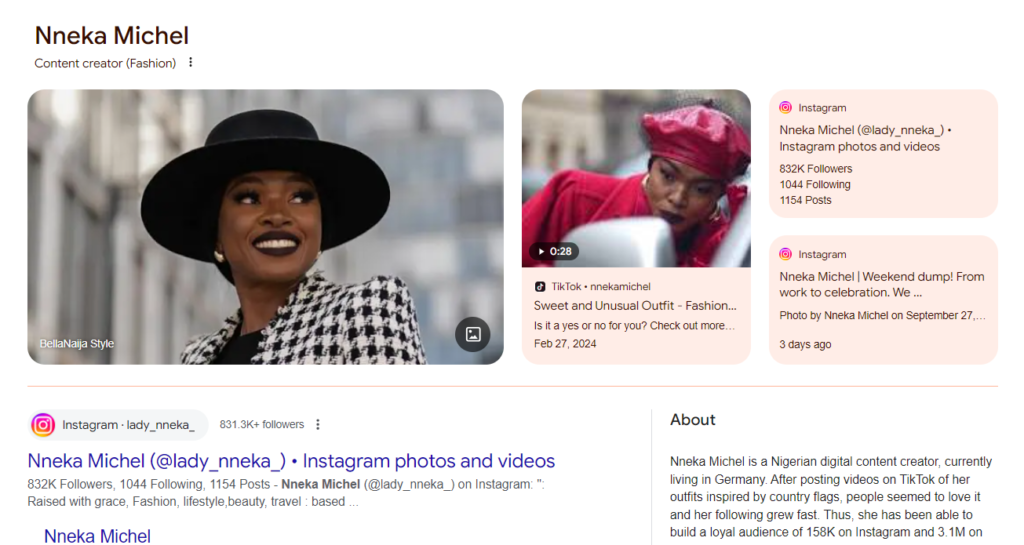
For Key Opinion Leaders (KOLs) and the brands that work with them, this shift is profound. Historically, a creator’s value was tied to their reach inside a social platform. Now that value extends to search engines, where content is matched to user intent. KOL search visibility is becoming a measurable asset.
2.1 From Algorithm Feeds to Search Engines

Social feeds are unpredictable. One day a creator’s video gets millions of views; the next, the algorithm changes and reach drops. Search is different. When creator content ranks on Google, it generates a steady stream of organic traffic over time. The post becomes an asset that compounds, much like a well-optimized blog article.
This also means KOL selection needs to change. Instead of just looking at follower count, engagement rate, or audience demographics, brands should evaluate whether a creator’s content is search-friendly. Does the creator use clear, descriptive titles? Are captions written with natural language that matches common queries? Does the content cover topics with lasting relevance? These factors now influence KOL search visibility directly.
2.2 What It Means for Brands and Marketers
For brands, the opportunity is to capture search demand through creators. Influencer marketing overlaps with SEO in ways that didn’t exist before. A partnership with a creator can now deliver value beyond the original campaign window—it can help your brand show up when potential customers are actively looking for solutions.
This creates a new collaboration between influencer teams and SEO teams. Marketers need to align campaign themes with search keywords, brief creators on relevant topics, and ensure content is technically indexable. It also means that creator partnerships can be justified with search performance metrics, not just reach and engagement. When done well, creator-led search traffic can reduce customer acquisition costs because you’re not paying for every impression—you’re earning organic visibility that keeps working long after the campaign ends.
3. Optimizing Creator Posts for Search: Influencer Content SEO Tactics
Getting creator content to rank isn’t automatic. You need a strategy that combines keyword research, content structure, and technical hygiene. This is where influencer content SEO comes in. The good news is that many of the tactics are similar to traditional SEO, but they’ve been adapted to the quirks of social platforms.
3.1 Keyword and Caption Strategy for Creator Posts
The caption is the most straightforward place to signal relevance. Encourage creators to naturally include target keywords in their captions, but avoid stuffing them. Google’s algorithms are sophisticated enough to detect unnatural repetition. Instead, focus on descriptive, conversational language that mirrors how people ask questions. For example, if the target keyword is “best wireless earbuds under $100,” a caption might be: “I tested 5 budget wireless earbuds under $100 — here’s the winner for everyday use.” That contains the keyword phrase naturally while providing context.
Hashtags still matter, but their role is more about categorization than ranking. Use a mix of broad and niche hashtags that reinforce the post’s topic. On-screen text is equally important. Google can extract text visible in videos, so adding a clear title card or using captions with relevant words helps indexing. Video descriptions on YouTube deserve special attention—use the first two lines for the main keyword and include a longer, natural description below. Comments can help too, because they add fresh context and user-generated signals. Asking a question in the caption and letting comments provide answers creates a richer entity around the post.
3.2 Technical Factors That Help Posts Get Indexed
Not every social post is indexable. There are several technical requirements that impact KOL search visibility:
- Public accounts: Private accounts are invisible to crawlers. Creators must have public profiles for their posts to appear in Google.
- Embeddable content: On platforms like TikTok, allow embedding so Google can render the content properly.
- Accurate titles and descriptions: Use clear, descriptive titles on YouTube, and write alt text for images where the platform supports it.
- Transcripts and captions: For video content, auto-generated or manual transcripts provide text that Google can index. This is especially important on YouTube.
- Structured content: If a creator has a blog or an Instagram carousel, use headings, bullet points, or lists within the image descriptions to make the content more parseable.
One common mistake is treating social posts like everything needs to be short and punchy. For search, slightly longer captions that explain context are better because they give Google more signals. A 200-word caption that tells a story and includes the target keyword naturally can outperform a one-liner with a hashtag.
3.3 Industry Best Practices for Influencer Content SEO
Over the past year, practitioners have developed a set of working best practices for influencer content SEO:
- Consistent posting themes: Creators who focus on a specific niche are more likely to rank for related queries. Google builds topical authority from consistency.
- Clear content structure: Start with an engaging hook, followed by context, then the main value. End with a call to action. This helps both users and bots.
- Engagement depth over vanity likes: Comments and shares carry more weight than a passive like. Deep discussions in the comment section signal that the content is valuable.
- Avoid duplicate or spammy captions: If a creator copies the same caption across multiple posts, Google may treat them as duplicates and rank none. Every post should have a unique, context-specific caption.
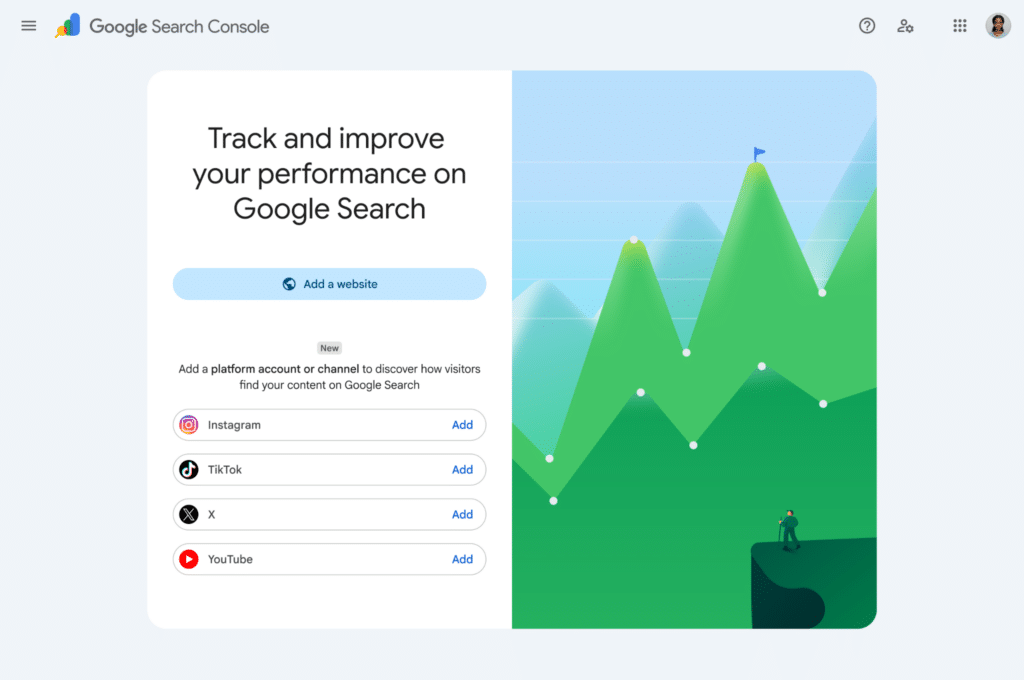
- Monitor indexing status: Use Google Search Console with
site:instagram.comorsite:tiktok.comqueries to see if a creator’s content is indexed. Not all posts will make it, and understanding which formats get indexed helps adjust strategy.
3.4 Real-World Example: A Creator Post That Won Search Placement
A great example comes from the niche hobby space. I’ve seen a creator on YouTube who reviews vintage film cameras. One video, titled “The Best 35mm Film Cameras for Beginners in 2025,” ranks on page one of Google for that exact query. The video is 18 minutes long, well structured, and includes a timestamped table of contents. The description is 300 words with a list of all cameras mentioned, plus links to each camera’s manual. The creator also posted a TikTok version with a short clip and a caption: “These 3 film cameras are perfect for beginners — full review on YouTube.”
What made this work? The creator didn’t just rely on YouTube’s search. They used the exact phrase people type into Google, provided substantive content, and gave Google’s crawlers plenty of text to associate with the video. Today, that video drives consistent traffic from Google every month, months after it was posted. This is the kind of result that turns influencer marketing from a cost center into an asset.
4. Measuring the Google Creator Search Impact on Your Brand
You can’t improve what you don’t measure. The Google creator search impact introduces new ways to measure influencer effectiveness. Traditional metrics like reach and impressions tell you about visibility in social feeds, but search metrics tell you about demand capture.
4.1 SEO KPIs for KOL Search Visibility
Here are the key KPIs to track when measuring KOL search visibility:
| KPI | What It Measures | Where to Track |
|---|---|---|
| Creator post impressions in search | How often creators’ indexed posts appear in Google results | Google Search Console (Performance > Search results) |
| Branded query growth | Increase in searches for your brand or specific product terms | Google Search Console, Google Trends |
| Click-through rate (CTR) | Percentage of searchers clicking on creator content or your site | Google Search Console |
| Assisted conversions from creator-led search | Conversions where a creator post was the first touchpoint | Google Analytics 4 (multi-channel funnels) |
| Indexed creator posts count | Number of creator posts appearing in Google’s index | Site audit via site: queries or rank tracking tools |
| Ranking position for target keywords | How high creator content appears for defined keywords | Rank tracking tools like Ahrefs or SEMrush |
The most important metric is assisted conversions. It shows the business impact of creator-led search traffic. A creator post might not directly convert, but it plays a role in the user’s journey before they convert on your site. If you’re not tracking this, you’re missing the full picture of influencer ROI.
4.2 Using KOL Find to Monitor and Match Rank-Ready Creators
Finding creators whose content is positioned for search visibility requires more than manual browsing. This is where KOL Find’s AI-powered platform becomes useful. It analyzes millions of data points to match brands with KOLs on TikTok, Instagram, and YouTube, factoring in not just audience size but also content themes, engagement quality, and posting patterns that align with search indexing behavior.
Instead of spending days reviewing dozens of creators, you can define your target keywords and let the platform surface creators who already talk about those topics. The AI also surfaces emerging KOLs who are growing quickly and whose content has characteristics that rank well: clear descriptions, consistent niche focus, and public profiles. While KOL Find doesn’t directly influence Google’s algorithm, it helps you shortlist creators whose existing content has a higher probability of being indexed and matching search intent.
4.3 Lessons from Production: Common Pitfalls to Avoid
Through working on campaigns, I’ve seen several recurring mistakes that undermine KOL search visibility:
- Prioritizing follower count over content quality: A micro-creator with 10,000 dedicated followers and deep knowledge will often outrank a macro-influencer with a million followers but generic content. Google cares about topical relevance, not audience size.
- Choosing creators with private accounts: In one campaign, we signed an influencer who had excellent engagement but kept their profile private to avoid spam. None of their posts were indexed. We lost months of potential search traffic.
- Ignoring searchable text: Creators who only use visual content without captions, written descriptions, or on-screen text severely limit their indexing potential.
- Failing to track organic search performance: If you don’t set up Search Console filters and GA4 events, you’ll have no idea whether creator posts are driving search traffic. Measurement should start before the campaign, not after.
5. KOL Search Visibility: Pros, Cons, and When to Use It
Like any channel, creator-led search has trade-offs. Understanding these helps you decide when to invest.
5.1 The Upsides of Creator-Led Search
The biggest benefit is authenticity. A recommendation from a trusted creator carries more weight than a brand-sponsored display ad. When that recommendation appears in search results, it feels like a peer giving advice, not an advertising message. This aligns with how consumers make purchase decisions today.
There’s also cost efficiency. Organic search traffic doesn’t require paying for each click. Once a creator post ranks, it keeps delivering visits without ongoing spend. Compared to paid influencer placements or paid search ads, the long-term cost per acquisition can be significantly lower.
Finally, search visibility compounds. A single well-optimized creator post can rank for multiple related queries. It strengthens social proof because users see the content in a search context, which subtly signals that many people are talking about the brand.
5.2 The Risks and Limitations
On the downside, you don’t control the creator’s content. If the creator deletes the post, makes it private, or alters the caption, you lose the ranking. Platform policies also change. TikTok could alter its indexing behavior, or Google could decide to deprioritize certain social content next year. This makes creator-led search less stable than owning content on your own website.
Indexing inconsistency is another issue. Not all posts get indexed, and Google’s algorithms can be opaque about why. You might do everything right and still see no results for months. Measurement is also harder than traditional SEO because you’re relying on third-party platforms for data, and their analytics may not align with Google Search Console.
5.3 When to Prioritize KOL Search Visibility Over Traditional SEO
Prioritize creator-led search when you’re entering a niche where your brand has no authority yet. Creators already have trust with the audience, and their content can quickly appear in search results. If your target audience is Gen Z or younger millennials, they’re more likely to trust and engage with creator content than a traditional blog post.
You should also consider this approach when you need to build trust through peer-generated content rather than brand-only messaging. For example, a startup launching a new skincare product might find it more effective to sponsor a dozen dermatologists and skincare creators to post honest reviews than to write its own SEO articles. The creator content answers the same queries, but with perceived objectivity.
However, if you have a well-established content program that already ranks for your key terms, don’t replace it. Use creator content to complement and enhance it. The best strategy is often a hybrid: traditional SEO for your own properties, and influencer content SEO for third-party amplification.
6. The Future of Influencer Content SEO and Creator Discovery
The trend toward indexing social content is only beginning. We’re likely to see deeper integration between Google and social platforms, especially with the growth of AI-generated search summaries.
6.1 What the Google Creator Search Impact Means Next
In the near future, expect more granular indexing of even short-lived formats like Instagram Stories if they’re captured in public highlights. Google will likely get better at interpreting audio and visual content without relying solely on transcriptions. This means creators who speak clearly and show products on screen could rank even without extensive descriptions.
AI-generated search summaries, often called AI Overviews, will also change how users engage with creator content. Instead of clicking through to a post, users might see a summarized answer directly on the search page. This could reduce click-through rates, but it will also make the source creator’s post more visible as a citation. Brands will need to track citations in AI Overviews as a separate KPI.
6.2 How AI-Powered Matching Keeps Brands Ahead
As search behavior evolves, finding the right creators becomes more complex. AI-powered matching tools will become essential. KOL Find already helps brands identify emerging KOLs and rank-ready content across major platforms. By analyzing engagement patterns, content structure, and keyword overlap, it makes the discovery process scalable.
The brands that stay ahead will combine human insight with AI-driven data. They’ll use platforms like KOL Find to shortlist candidates, then manually evaluate the creator’s content quality and alignment. They’ll also keep an eye on search metrics, treating KOL search visibility as a continuous campaign goal rather than a one-time analysis.
Conclusion
The Google creator search impact is a structural shift that rewards brands willing to adapt. KOL search visibility is now a real, measurable outcome of influencer marketing. By optimizing creator posts for search, measuring the right KPIs, and avoiding common pitfalls, you can turn your influencer partnerships into a compounding source of organic demand.
The future favors brands that think beyond the feed and treat creator content as a search asset. Start by auditing your current creators’ indexability, then build a brief that includes keyword-focused captions and technical requirements. And when you’re ready to scale, use data-driven platforms like KOL Find to find creators whose content is positioned for visibility. The search engine is now a creator’s stage—make sure your KOLs are performing on it.
This article was published via SEOMate
Related Articles

YouTube Retention Strategy: How to Hook, Hold, and Convert Viewers
how-to-guide

What’s Making AI Impact Difficult to Measure for Marketers?
analysis
YouTube CTR, Instagram Reels Structure, and Industry News
news-coverage
Building Mini Personas to Write Content Your Target Audience Actually Wants
how-to-guide

Why Unpolished Reels Win: An Instagram Growth Strategy for Business
how-to-guide
Cyber5 Prep: Are You Ready for Paid Media’s Biggest Week?
how-to-guide