









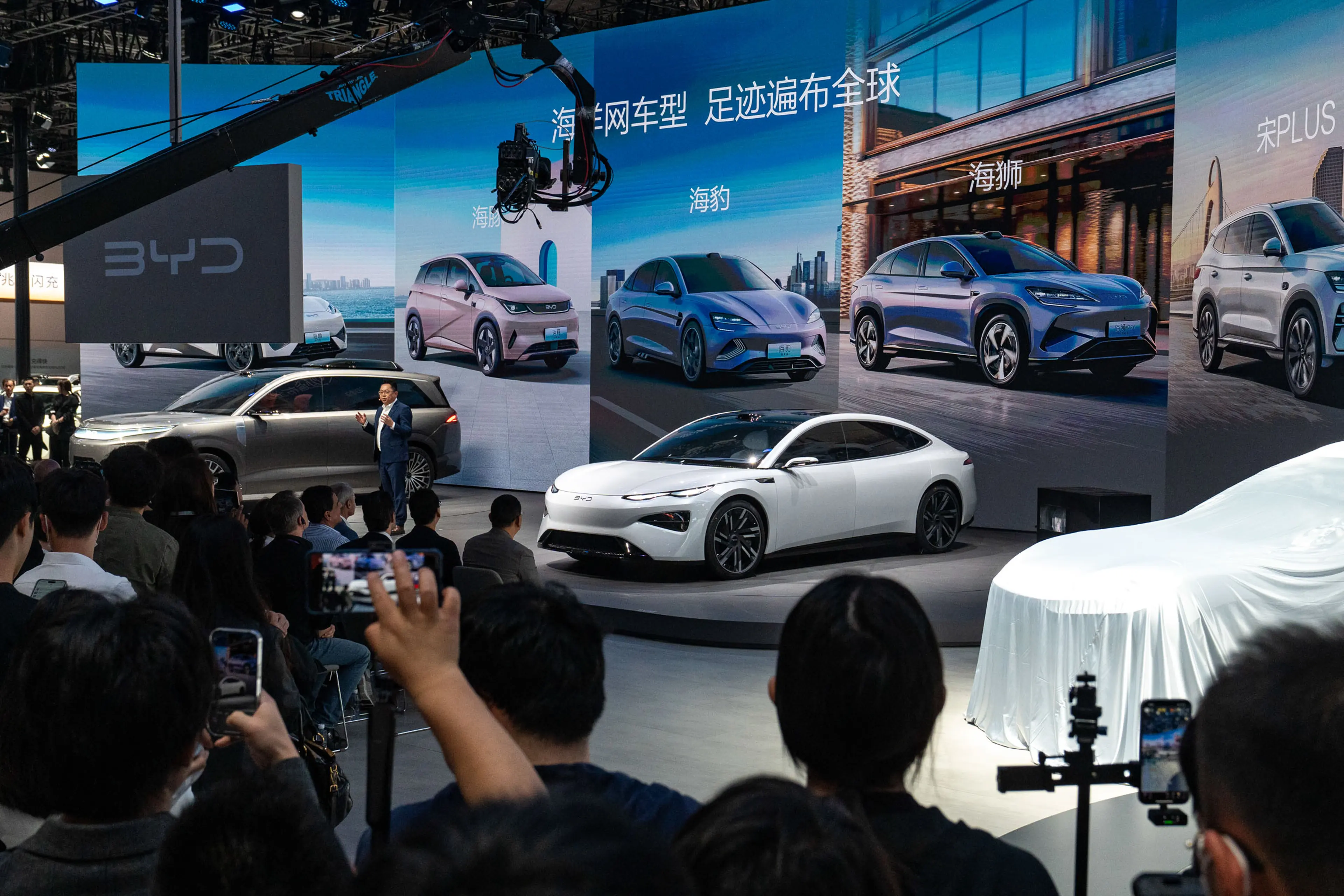
How Dijksman Communicatie chose 11 creators for BYD with Stellar
How Dijksman Communicatie chose 11 creators for BYD with Stellar
The BYD Influencer Campaign: A Creator Selection Case Study Deep Dive
Selecting the right creators for an influencer campaign is one of the most consequential decisions a brand can make. The BYD influencer campaign developed by Dijksman Communicatie offers a compelling look at how data-driven creator selection can replace guesswork. This creator selection case study explores how the agency identified 11 authentic creators from a large pool of candidates, the framework they used, and the lessons any brand can apply. Whether you're launching an EV awareness push or entering a new regional market, the way you choose your KOLs can determine whether your campaign genuinely connects or quietly underperforms.
The Challenge Behind the BYD Influencer Campaign

Why Dijksman Communicatie Needed a More Data-Driven Approach
Dijksman Communicatie is a Netherlands-based communications agency known for bridging traditional PR and modern digital influence. When BYD (Build Your Dreams), the Chinese electric vehicle manufacturer, tasked them with launching a regional influencer effort, the agency faced a familiar but increasingly difficult problem: how do you select 11 creators from a massive pool of candidates when your reputation — and your client's brand — depends on getting it right?
The challenge wasn't finding influencers. It was finding the right ones. With BYD expanding aggressively across European markets, the agency needed creators who could speak credibly about EVs, connect with local audiences, and produce content that felt genuine rather than sponsored. Manual research — scrolling through profiles, checking follower counts, browsing past posts — simply couldn't scale to the level of rigor required. When you're sifting through thousands of potential candidates, the risk of bias, incomplete data, or simple fatigue becomes a real liability.
What the BYD Influencer Campaign Had to Achieve

The campaign had three clear objectives. The first was EV brand awareness — introducing BYD to audiences who might be unfamiliar with the company and its vehicles. The second was audience education, which meant explaining the practical benefits of electric vehicles in an accessible, non-technical way. The third was local market relevance, ensuring the campaign resonated with regional cultural contexts rather than a one-size-fits-all global message.
These objectives pushed the agency toward creators who could educate and persuade, not just entertain. The BYD influencer campaign wasn't designed for viral spectacle; it was designed for meaningful engagement. That distinction shaped every subsequent decision, from the creators selected to the content formats deployed.
The Risk of Relying on Manual Influencer Research
The dangers of manual influencer research are well documented. Follower counts, the metric most brands default to, are increasingly unreliable as a measure of actual influence. A creator with 500,000 followers might deliver a 0.5% engagement rate, while a micro-influencer with 15,000 followers might deliver 8%. Worse, an audience that's misaligned with your target market can produce high reach but zero conversion — and in some cases, outright reputational damage.
In practice, brands frequently fall into this trap. They see a large follower count, assume reach equals influence, and then wonder why their campaign metrics disappoint. The hidden risk is reputational: a creator whose audience is misaligned with your values can damage a brand's credibility in ways that are difficult to repair. For a company like BYD, entering competitive European EV markets, that kind of misstep could undermine months of careful positioning.
How Brands Choose Influencers: A Creator Selection Case Study Framework

This section turns the BYD story into a repeatable framework that other brands can follow — a structured answer to the question of how brands choose influencers in a data-rich environment.
Step 1: Defining the Ideal Creator Profile

Before searching for creators, the agency needed a precise definition of who they were looking for. The ideal creator profile included several dimensions:
- Geography: Creators based in or strongly connected to the target European markets.
- Audience demographics: Followers who matched BYD's target buyer profile — typically 25 to 50 years old, environmentally conscious, and open to new automotive brands.
- Content style: Authentic, informational, and lifestyle-oriented rather than overly polished or promotional.
- Brand affinity: Existing interest in EVs, sustainability, or technology.
Interestingly, brand affinity mattered more than automotive expertise. A creator who had previously discussed sustainability topics was more credible than a car enthusiast with no environmental focus. The lesson here is that relevance to your brand's values often outweighs raw knowledge about your product category.
Step 2: Evaluating Engagement and Authenticity

After defining the profile, the next step was evaluating engagement quality. Follower volume became largely irrelevant. What mattered was:
- Comments: Are they substantive? Do they reference the creator's actual content?
- Saves and shares: These signal that content resonates deeply rather than merely being scrolled past.
- Audience trust: Does the creator have a genuine relationship with their community?
- Engagement patterns: Suspicious spikes in likes or follows indicate bots or purchased engagement.
Spotting inauthentic engagement is a skill in itself. A creator whose comment section is full of generic praise like "great post!" or emoji spam, with no genuine conversation between the creator and their audience, is a red flag. Similarly, an account that gained 20,000 followers overnight warrants scrutiny. In the BYD selection process, these signals were critical in separating authentic creators from inflated profiles.
Step 3: Using an Influencer Matching Platform to Shortlist Candidates
This is where the process scaled beyond human capacity. The agency used Stellar, an influencer matching platform, to analyze potential candidates across social channels. Additionally, platforms like KOL Find provide similar AI-powered capabilities — analyzing millions of data points across TikTok, Instagram, and YouTube to match brands with ideal KOLs. These tools don't just count followers; they examine audience overlap, engagement authenticity, and content relevance.
It's worth noting that an influencer matching platform is not a replacement for strategy. It's a force multiplier for it. The platform narrows a pool of thousands down to a shortlist of dozens, which is where human judgment takes over.
Step 4: Combining Data with Human Judgment
The final step in the framework is qualitative review. The data tells you which creators are statistically likely to perform; humans tell you which ones will feel right for the brand. This means reviewing shortlisted creators for tone, values, and creative fit — things that algorithms cannot fully assess.
For the BYD campaign, this hybrid approach meant that every one of the 11 finalists had both strong quantitative metrics and a qualitative fit with BYD's brand values. Neither factor alone would have been sufficient. The data narrowed the list; humans made the final call.
Inside the Influencer Matching Platform: How Stellar Found 11 Creators
The Data Points Stellar Analyzed for BYD
The technical side of this process is worth examining. When the agency ran creator searches through Stellar, the platform analyzed several data dimensions for each candidate:
- Audience location: Geographic distribution of followers, down to city-level granularity.
- Age and gender breakdown: How well the audience matched BYD's target demographics.
- Interests: Topics and hashtags the audience engages with beyond the creator's own content.
- Follower growth patterns: Whether growth was organic and steady or marked by suspicious spikes.
- Brand affinity: Past mentions of or engagement with EV, sustainability, and automotive topics.
- Engagement quality: Ratio of likes to comments, comment sentiment, and interaction consistency.
These data points are processed across millions of individual posts, profiles, and interactions — a scale that makes manual analysis essentially impossible. The processing power required is substantial, but the payoff is a level of audience insight that traditional methods simply cannot match.
How AI Ranked and Filtered Potential KOLs
The AI engine behind the influencer matching platform uses algorithms to separate signals of genuine influence from noise. One of the most important — and underappreciated — mechanisms is negative filtering.
Negative filtering means removing audiences that don't overlap with your target segment, rather than just positively matching creators. For example, a creator might have excellent engagement and high-quality content, but if 60 percent of their audience lives in a geography where BYD isn't marketing, they're a poor fit regardless of how good they look in isolation.
This dual approach — positive matching for values and interests, negative filtering for audience alignment — is what makes the difference between a listicle of popular influencers and a shortlist of genuinely relevant partners. It's a distinction that becomes immediately obvious when you compare the quality of recommendations from a well-configured platform versus a simple search.
From Stellar Shortlist to Final Selection: A Step-by-Step Walkthrough
The workflow from platform to final selection typically follows this path:
- Search: The agency enters the ideal creator profile parameters into Stellar.
- Filter: The AI removes accounts with bot activity, irrelevant audiences, or low engagement authenticity.
- Rank: Remaining creators are scored against the campaign's specific objectives.
- Review: Human marketers examine the top candidates' content for tone, values, and creative style.
- Approve: The final 11 are approved by both the agency and the client.
This process is transparent and repeatable. It doesn't rely on a single marketer's instinct; it compiles evidence from data and then validates that evidence with human judgment. For a client like BYD, that transparency builds confidence in the selection.
The Outcome: 11 Creators Chosen for BYD
The Creator Mix and Content Strategy
The 11 selected creators represented a deliberate balance. Some were micro-influencers in the 10,000 to 50,000 follower range, chosen for their high engagement and niche authority. Others were mid-tier creators capable of broader reach. The mix ensured that the BYD influencer campaign achieved both depth and breadth across the target markets.
Content formats varied accordingly — from short-form TikTok videos to detailed Instagram carousels and longer YouTube explainers. What unified them was the emphasis on authentic storytelling over scripted advertising. Each creator was given creative freedom within a clear set of messaging guidelines, which produced content that felt native to each platform.
Early Performance Signals and Campaign Wins
While detailed performance data from the campaign hasn't been fully published, the early signals align with what the framework predicts: higher engagement rates than follower-count-based predictions would suggest, more meaningful audience conversations about EVs, and positive sentiment in comment sections.
One notable observation from this creator selection case study: smaller, highly engaged creators consistently outperformed larger influencers in niche EV conversations. This isn't surprising — automotive purchasing decisions are high-consideration, and audiences trust peer perspectives more than celebrity endorsements. When someone with 20,000 followers produces a detailed review of a BYD vehicle, their audience perceives it as a recommendation from a trusted source, not an advertisement.
Real-World Implementation: Lessons from the BYD Campaign
What Worked Well in the Selection Process
Several elements of the process delivered clear value. The most obvious was speed — the influencer matching platform compressed weeks of manual research into days. But beyond speed, there was accuracy. Because the platform analyzed actual audience data rather than surface-level metrics, the selected creators reached people who were genuinely likely to be interested in BYD vehicles.
The third win was reduced guesswork. Every selection decision had supporting evidence behind it. When the agency presented the 11 creators to BYD, they could justify each choice with data rather than gut feeling. For an agency, that level of accountability strengthens client trust and makes future collaboration easier.
Common Pitfalls to Avoid in Creator Selection
If there's a counterfactual lesson from this campaign, it's that brands often undermine their own success in predictable ways:
- Chasing viral fame: A creator who went viral once is not the same as a creator who consistently engages their audience.
- Ignoring audience overlap: Popularity in the wrong niche is irrelevant to your campaign.
- Skipping contract alignment: Clearly defining content expectations, usage rights, and performance metrics in advance prevents disputes later.
These mistakes are common because they're easy to make. The data-driven framework built in this campaign directly addresses each one.
How This Creator Selection Case Study Shapes Future Campaigns
For Dijksman Communicatie, the value of this approach extends beyond BYD. The same framework can be applied to other clients, other markets, and other verticals. The platform's data doesn't just solve one problem; it builds a foundation for future decision-making.
Tools like KOL Find are making this level of analysis accessible to brands of all sizes. By analyzing millions of data points across TikTok, Instagram, and YouTube, they democratize the sophisticated creator matching that was previously available only to large agencies with dedicated research teams.
Best Practices for Brands Planning Influencer Campaigns
Start with Campaign Objectives, Not Influencer Names
The most common mistake brands make is starting the other way around. They see a celebrity or popular creator and try to force the campaign around them. This puts the creative before the strategy. The BYD case study shows that starting with objectives, audience, and messaging produces better alignment — and better results. Define what you're trying to achieve first, then let the data guide you toward the creators who can help you achieve it.
Use AI-Powered Influencer Matching Platforms for Scale and Accuracy
Manual influencer research simply cannot compete with the scale and accuracy of an AI-powered influencer matching platform. These platforms can analyze data across millions of profiles, identify authentic engagement, and match audiences with precision. For brands serious about influencer marketing, they're becoming an essential part of the toolkit — not optional, but necessary for staying competitive.
Measure What Matters Beyond Vanity Metrics
Reach and likes are easy to report but often meaningless in isolation. Instead, track:
- Engagement rate (comments + saves + shares divided by impressions)
- Audience sentiment (positive versus negative commentary)
- Conversion metrics (link clicks, promo code redemptions, test drive bookings)
These are the numbers that tie influencer activity to business outcomes. They're also the numbers that justify campaign budgets to stakeholders.
Build Long-Term Relationships with Selected KOLs
Finally, the best creator selection strategies take a long-term view. Rather than one-off posts, brands should nurture ongoing relationships with selected KOLs. Repeat collaborations build authenticity, deepen audience trust, and reduce the friction of onboarding new creators for every campaign. A creator who has worked with your brand multiple times becomes a true advocate, not just a paid promoter.
Conclusion
The BYD influencer campaign developed by Dijksman Communicatie is more than a case study in EV marketing — it's a blueprint for how brands can approach creator selection in a data-driven world. By combining the analytical power of an influencer matching platform with human judgment and strategic clarity, the agency found 11 creators who genuinely connected with BYD's goals.
The broader lesson is simple. Choosing the right creators isn't about finding the biggest accounts; it's about finding the right ones. Whether you're launching an electric vehicle, a consumer app, or a lifestyle brand, the framework outlined here — define, evaluate, shortlist, and decide — will serve you well. The tools are already available. The question is whether brands will use them.
This article was published via SEOMate
Related Articles

YouTube Retention Strategy: How to Hook, Hold, and Convert Viewers
how-to-guide

What’s Making AI Impact Difficult to Measure for Marketers?
analysis
YouTube CTR, Instagram Reels Structure, and Industry News
news-coverage
Building Mini Personas to Write Content Your Target Audience Actually Wants
how-to-guide

Why Unpolished Reels Win: An Instagram Growth Strategy for Business
how-to-guide
Cyber5 Prep: Are You Ready for Paid Media’s Biggest Week?
how-to-guide