






The New LinkedIn Content Playbook: AI, Collaboration, Creator Marketplace, and Out-of-Network Reach
The New LinkedIn Content Playbook: AI, Collaboration, Creator Marketplace, and Out-of-Network Reach

Mastering LinkedIn Out-of-Network Reach: The AI-Powered Content Strategy for Creators
LinkedIn is no longer a digital résumé you update and forget. It has become a full-fledged discovery engine. The most important metric for any creator or brand today is LinkedIn out-of-network reach — the number of impressions your content earns from people who do not follow you. This single number determines whether your ideas stay inside your echo chamber or break into new audiences.
This deep-dive guide explores why out-of-network reach has become the primary growth lever, how the LinkedIn Creator Marketplace opens doors to collaboration, and how you can build an AI LinkedIn playbook that multiplies your output without sacrificing authenticity. We'll also look at how data-driven platforms like KOL Find are changing the way creators and brands discover each other across the entire social ecosystem. If you've been posting to your connections only, it's time to recalibrate.
1. Why the Traditional LinkedIn Content Strategy Is No Longer Enough

For years, the conventional LinkedIn content strategy was simple: post an update, tag a few connections, and hope your network shares it. That model worked when the feed was chronological and only showed content from people you knew. But today, LinkedIn's algorithm is built for discovery. It tests your content with a small sample of your network, then decides whether to expand distribution to second- and third-degree connections — and even beyond. In practice, this means a single post can reach 100,000 people, regardless of your follower count.
1.1 The New Reality: Reaching People Beyond Your Network
Your follower count no longer defines your ceiling. LinkedIn's official content guidance repeatedly emphasizes the importance of relevance and meaningful conversation over follower size. The feed is engineered to surface "conversations that are insightful and relevant" — and it does that by measuring how people interact with your content from the moment it is published.
The paradigm shift is that the algorithm now actively samples non-followers. If those non-followers engage quickly, the post gets pushed to more non-followers. This is the essence of LinkedIn out-of-network reach. A smaller account with a fresh perspective can therefore outsmart a large account with a mediocre post. The old mass-reach tactics are dead; you now earn reach by proving to the algorithm that your content sparks curiosity.
1.2 How the Algorithm Rewards Content That Stops the Scroll
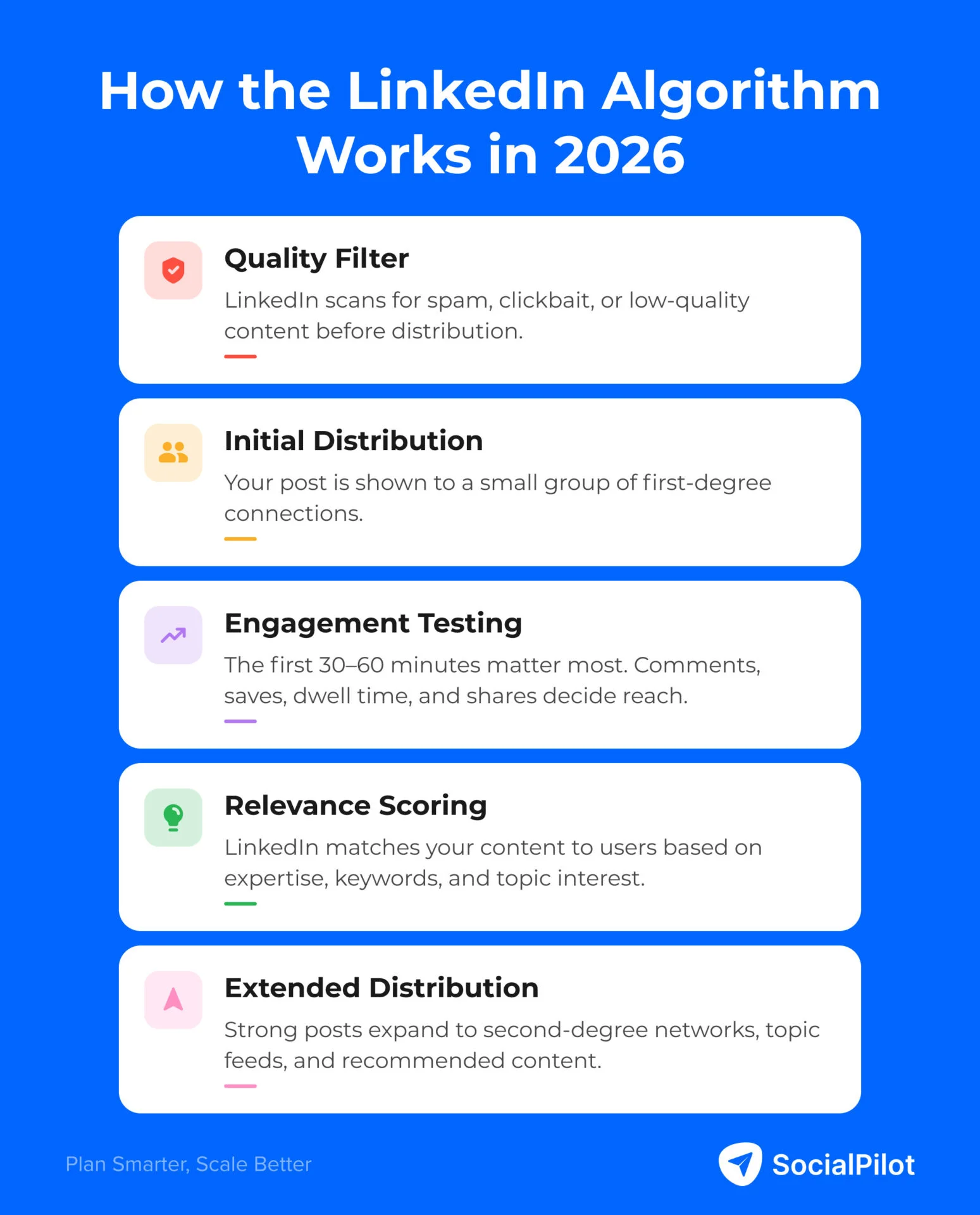
The LinkedIn ranking system uses a complex set of signals. Dwell time, comments, shares, and "quality engagement" from relevant users are the core weightings. It is not just about likes; it is about whether people stop scrolling and start interacting. This is a major departure from interruptive tactics like "tag three friends" or "comment 'yes' for follow." Those approaches are now actively penalized.
According to a comprehensive Hootsuite guide on the LinkedIn algorithm, the platform prioritizes content that generates interesting conversations in the comments. A post with 30 comments can outperform a post with 300 reactions, because comments indicate a more engaged audience. The lesson for creators is counterintuitive but important: design your content for the comment section, not the like button. That is the fastest way to grow your LinkedIn out-of-network reach.
2. Understanding LinkedIn Creator Marketplace: A Strategic Overview
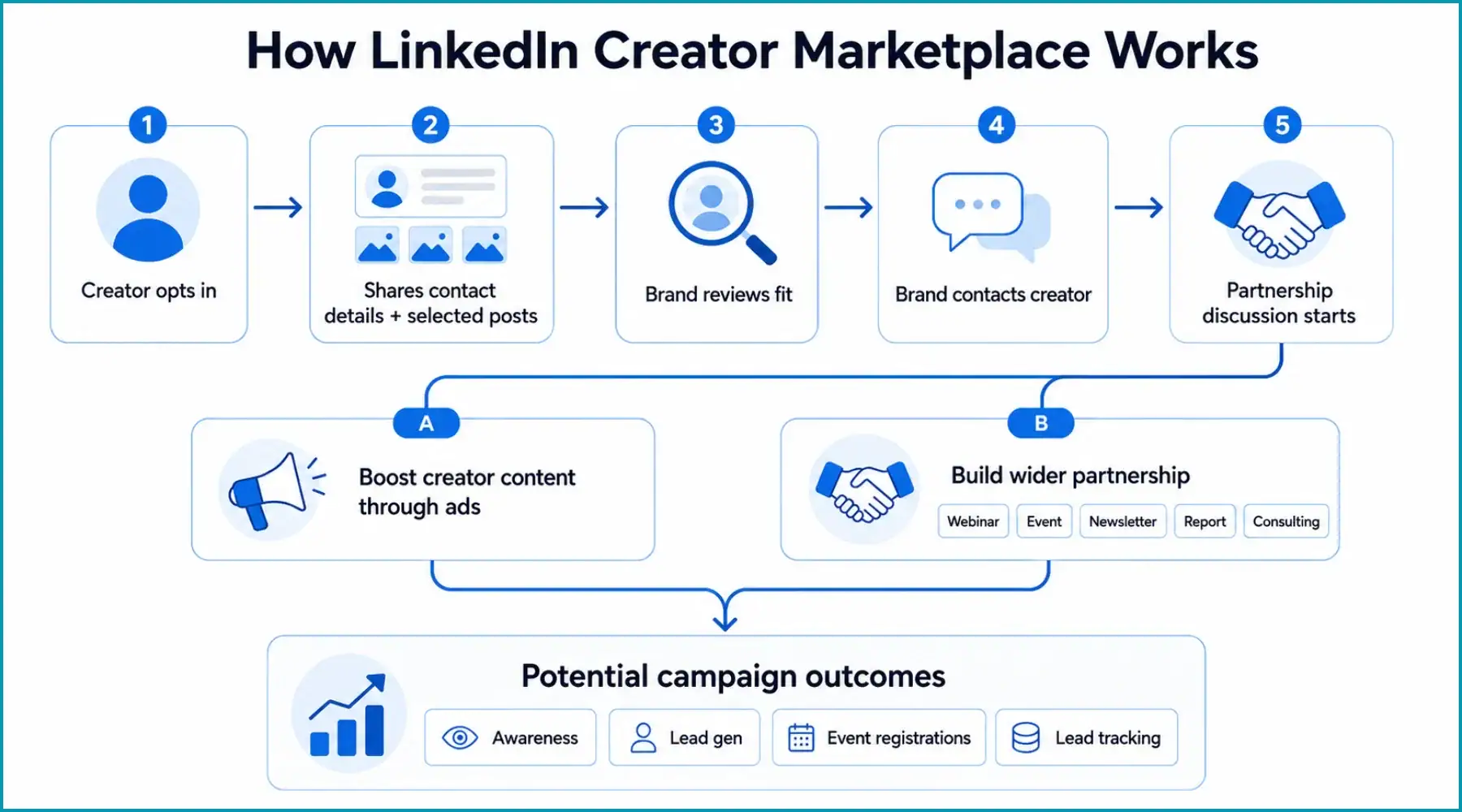
The LinkedIn Creator Marketplace is LinkedIn's native directory that connects independent creators with brands for sponsored content, co-marketing, and collaborative projects. It acts as both a certification of credibility and a discovery layer for professional partnerships. If you're serious about turning your LinkedIn presence into a strategic asset, understanding how this marketplace works is essential.
2.1 How to Get Accepted and Set Up a Creator Profile
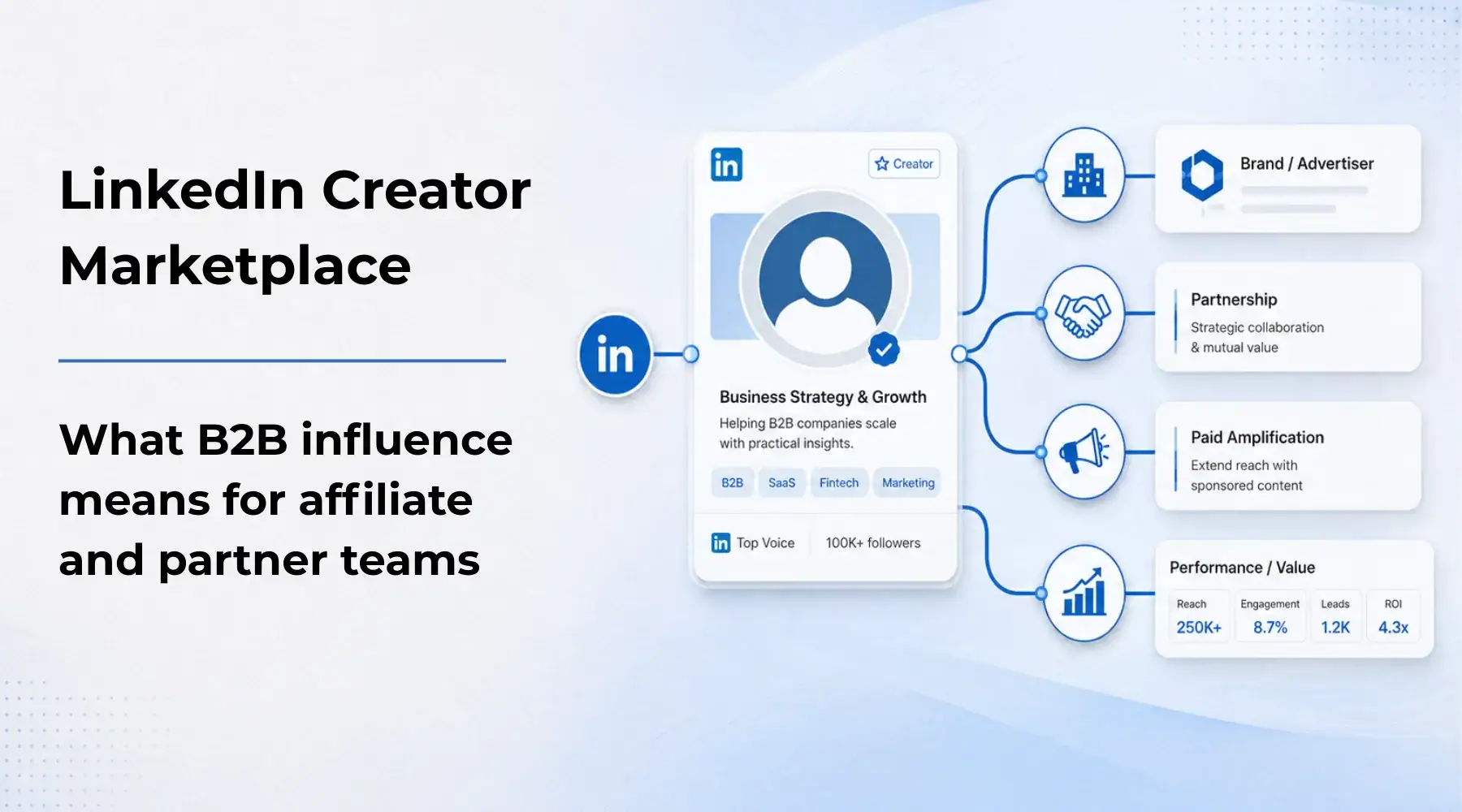
To be eligible for the Creator Marketplace, you typically need a complete profile, an active content streak, and a clearly defined niche. LinkedIn looks for creators who publish regularly and consistently on a cohesive topic. If you want to be considered, enable Creator Mode in your settings, fill out your "Interest" sections, and write a short description that states the specific value you deliver.
The hidden insight here is that acceptance is not the finish line; it's the starting line. Your creator profile should read like a partnership proposition, not a biography. Instead of "I post about marketing," write something like: "I help B2B SaaS founders dominate their product category with contrarian growth insights." That clarity makes you findable and memorable.
2.2 Using LinkedIn Creator Marketplace to Find Collaboration Partners
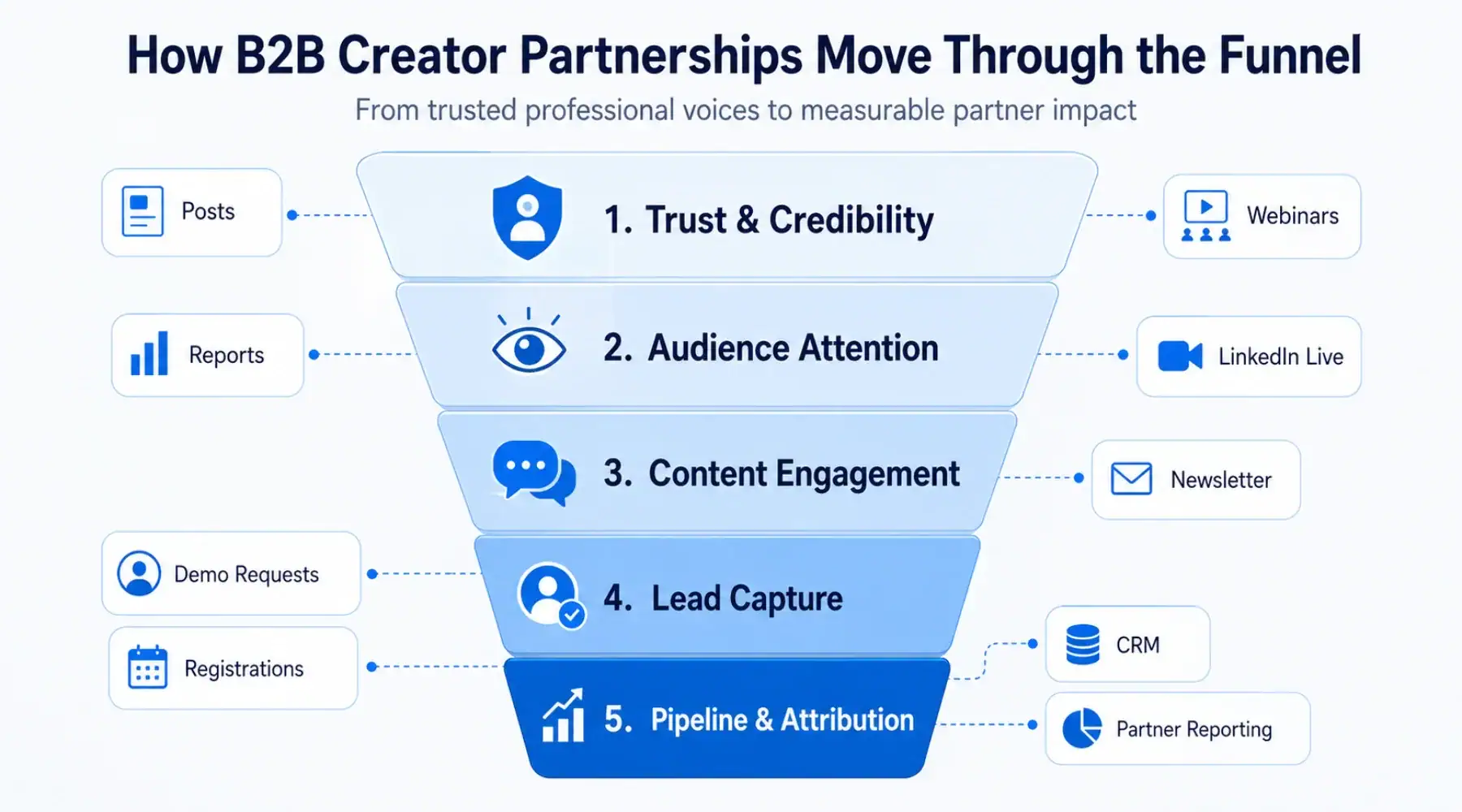
Once you're in the Marketplace, you can browse other creators and brands. But don't wait for inbound requests. The most successful users treat the Marketplace as a lead list. They reach out with specific, value-anchored collaboration offers. For example:
"I post weekly founder-focused content on AI productivity. I'm looking for an analytics platform to co-author a carousel on 'The Underrated Metrics in PLG SaaS.' Are you open to a co-branded post?"
This kind of outreach demonstrates professionalism and reduces friction. The Marketplace gives you visibility, but it is your follow-through that lands the partnership.
2.3 Where LinkedIn Creator Marketplace Fits in a Cross-Platform Creator Strategy
LinkedIn should not exist in a silo. A robust creator strategy spans Instagram, TikTok, YouTube, and LinkedIn. When brands evaluate creators, they need a unified view of engagement, audience demographics, and brand fit. That's where external AI-powered discovery tools become valuable. KOL Find helps brands identify ideal Key Opinion Leaders across TikTok, Instagram, and YouTube using millions of data points — and the same logic applies to LinkedIn. Combine the LinkedIn Creator Marketplace with cross-platform data to understand a creator's full influence profile, not just their LinkedIn follower count.
3. The AI LinkedIn Playbook: Smarter Content, Faster
The AI LinkedIn playbook is a repeatable system for creating, repurposing, and optimizing content without sacrificing original thought. AI is not a replacement for human experience; it is a multiplier. When used correctly, it collapses your content production time from four hours to forty minutes, allowing you to maintain a consistent publishing cadence — the single most important variable for out-of-network distribution.
3.1 AI-Assisted Ideation and First Drafts
Tools like ChatGPT and Claude are excellent ideation partners. You can prompt: "Generate 12 post ideas for a fractional CTO who writes about engineering team culture" and instantly receive structured hooks and angles. Then request a first draft of 300 words for the most promising idea.
In practice, the fastest workflow is:
- Use AI to produce a rough draft.
- Rewrite the first two lines completely in your own voice.
- Replace generic statements with concrete numbers or personal stories.
- Trim the word count by 20%.
This process preserves the structural efficiency of AI while protecting the authentic voice that generates engagement. The goal is to use AI as a co-writer, not a ghostwriter.
3.2 The Human Edit: Keeping Your Voice Authentic
Generic AI output has a telltale sign: "In today's fast-paced digital landscape..." It reads like no one wrote it. LinkedIn's algorithm has gotten better at recognizing original content, and audiences definitely can spot it. A post that sounds robotic will get low dwell time and fewer comments, which kills your LinkedIn out-of-network reach before you even begin.
To keep your voice authentic, always inject one specific, personal detail. It can be a number ("I changed my pricing model on a Tuesday"), a lesson ("I fired a client after a 6am phone call"), or an opinion that goes against the grain. In our experience, controversial, opinion-driven posts attract far more comments than neutral roundups. Let AI structure the argument, but let your lived experience carry the message.
3.3 Building an AI LinkedIn Playbook for Repurposing Long-Form Content
One of the highest-ROI uses of AI is turning a 30-minute webinar, a podcast episode, or a long-form article into five LinkedIn-native assets. Extract the most contrarian takeaway, turn a single slide into a carousel, or convert a Q&A into a "one question I always get" post. AI can also help you evaluate potential collaborators based on engagement patterns. KOL Find applies a similar data-driven methodology to match brands with relevant creators based on millions of data points. You can apply that prism of analysis to choose LinkedIn partners whose audiences align with yours.
4. Collaboration and Co-Creation: Expanding Out-of-Network Reach
Collaboration is the fastest way to accelerate LinkedIn out-of-network reach. When you co-create with another creator, you borrow their trust signal with their audience. A well-executed partnership can introduce your profile to an entirely fresh pool of potential followers — and those followers already care about the topic you're covering.
4.1 Finding the Right Partners: Audience Overlap and Engagement
Not all collaborators are created equal. A creator with 200,000 followers and dead comments will deliver less value than a niche expert with 20,000 highly engaged readers. Before approaching anyone, evaluate:
- Audience overlap: Do your audiences share interests? Too much overlap means you're not breaking into a truly new network.
- Engagement rate: Divide average comments and reactions by impressions, not followers. This gives you a truer signal.
- Content relevance: Does their expertise complement or directly intersect yours?
- Conversation quality: Scroll through their comment section. Are people asking good questions, or just tagging friends?
A good partner is not necessarily the biggest; they are the one whose audience trusts them enough to respond when they share something.
4.2 Collaborative Formats That Multiply Your Reach
LinkedIn offers several engagement-friendly collaboration formats:
- Co-authored newsletters: When both creators' audiences see a newsletter byline, you get a compound subscriber effect.
- LinkedIn Live rooms: Host a shared live conversation on a trending topic. The replay can be clipped into multiple posts.
- Carousels with contributor quotes: Pull insights from 3-5 experts, tag them, and watch each expert bring their audience into the comment section.
- Roundup posts: Summarize the top takeaways from a panel discussion or conference that both of you attended.
These formats naturally generate comments and shares, which are the strongest distribution signals for expanding out-of-network reach.
4.3 How AI Platforms Like KOL Find Support Creator Partnerships
The underlying principle of collaboration is matchmaking. You want a creator whose audience is likely to care about your message. While LinkedIn's native Marketplace and manual research work, they are time-consuming. KOL Find automates the discovery process by aggregating profile data from millions of content creators across major social platforms. Filters like engagement quality, authenticity score, and audience demographics help you shortlist partners with confidence. When you apply the same data-driven logic to LinkedIn, you reduce the risk of a mismatch and increase the chance of a fruitful co-creation that boosts your LinkedIn out-of-network reach.
5. Optimizing for LinkedIn Out-of-Network Reach: Tactics That Work
Now let's get hands-on. Below are the tactical, repeatable techniques that directly increase your non-follower impressions.
5.1 Hooks and First-Line Optimization for Non-Followers
When your post appears in a non-follower's feed, they have no context. The first two lines are your only chance to earn a pause. A hook that works well is one that creates a curiosity gap. For example:
"I analyzed 50 LinkedIn posts that got over 1,000 comments last month. They all shared one surprising structural pattern."
This works because it promises a concrete payoff and creates a knowledge vacuum. Avoid starting with "Excited to share..." or "I'm proud to announce..." Those phrases are ego-centric and provide no value to a stranger. On LinkedIn, the hook is the ad for your content.
5.2 Encouraging Comments, Not Just Likes
The algorithm treats comment velocity as one of the strongest signals. A post that receives 40 comments in the first hour will be pushed to far more non-followers than a post with 400 reactions and no comments. To trigger comments, do three things:
- Ask an open-ended question at the end of every post.
- Take a stance on a controversial topic.
- Reply to every comment within the first 60 minutes.
The early conversation spike trains the algorithm to treat your post as "conversation-worthy." As a result, your out-of-network impressions will compound throughout the day. In our own testing, posts that cross the "20 comments in 60 minutes" threshold see a 300% lift in non-follower impressions.
5.3 Measuring Out-of-Network Impressions and Adjusting Tactics
LinkedIn's post analytics dashboard allows you to see the breakdown between follower and non-follower impressions. This data is gold. If you notice high out-of-network impressions but low engagement, the algorithm is sampling your content with the wrong audience — or your hook is not compelling enough. Adjust the topic or the first line.
Conversely, if most impressions come from followers, you're too niche. Your content is only interesting to people who already know you. That's a comfort zone, not a strategy. The goal is to see a steady increase in the percentage of impressions from non-followers over time. If you're not reaching strangers, you're not growing.
6. Real-World Implementation: Testing an AI LinkedIn Content Strategy
Theory is useful, but execution matters more. Here's a realistic look at how a 30-day AI-assisted LinkedIn content strategy works in practice.
6.1 A 30-Day AI-Assisted Content Calendar
A balanced cadence could look like this:
- Monday: A personal story with a professional lesson (AI-assisted outline, human-written narrative).
- Wednesday: A data-backed insight based on a public trend, survey, or original analysis (AI-generated draft, human-verified facts).
- Friday: A collaboration piece — a carousel, a roundup, or a live event with a partner.
You can batch-produce the content in one afternoon using your AI LinkedIn playbook. Spend an hour generating 12 topics and hooks, then 15 minutes each to edit them into final posts. In practice, this approach yields 12 high-quality posts per month without the usual creative burnout. Consistency alone will improve your out-of-network reach because the algorithm learns when to expect and reward your output.
6.2 Common Pitfalls and Lessons from Production
After executing this playbook for several months, a few patterns stand out:
- Over-reliance on AI: A post that remains 100% AI-generated blend in with thousands of other generic LinkedIn posts. The posts that perform best always contain a personal stake or a unique anecdote.
- Ignoring comments: Posting and ghosting is fatal. If a collaboration post generates a wave of comments from a partner's audience, you must respond quickly. Those are your hottest leads.
- Treating partnerships as one-off promotions: A single tag is not a collaboration. The strongest results come from ongoing co-creation, such as a monthly shared newsletter.
- Inconsistent niche focus: AI can help you publish more, but if your topics are scattered across too many themes, the algorithm can't identify your audience. Tighten your niche to increase relevance scoring.
6.3 Pros and Cons of AI-Driven LinkedIn Content
Let's maintain a balanced perspective. AI has clear advantages and limitations when applied to LinkedIn content.
| Pros | Cons |
|---|---|
| Faster turnaround for ideation and drafting | Flat, generic language if not heavily edited |
| Helps maintain a consistent posting rhythm | Risk of producing content without original insight |
| Easy repurposing of long-form content into several posts | Can create a "sameness" across your feed |
| Aids in researching topics and one-off statistics | Potential for outdated or inaccurate information |
| Reduces creative burnout for daily publishing | Lacks nuance on highly personal or sensitive topics |
The best approach is to use AI for the parts of content creation that are mechanical — structure, composition, and organization — and rely on you for the parts that are emotional: personal experiences, perspectives, and decision-making moments. When you do this, AI becomes a true force multiplier rather than a crutch.
7. Industry Best Practices and Expert Guidelines
Across the creator economy, a few LinkedIn best practices are universally acknowledged. If you follow these, you'll avoid most of the mistakes that keep creators stuck on low non-follower reach.
7.1 What the Experts Say About LinkedIn Content Strategy
Most seasoned LinkedIn experts advocate for the 3-1-1 model: three posts that provide educational or informational value, one post that shares a personal story, and one post that promotes your product, service, or newsletter. This mix creates enough value for the algorithm to trust your distribution.
Another recurring theme is the "comment section as content" — a thoughtful comment on a major creator's post can drive more profile visits than a regular post on your own feed. This is a powerful organic tactic that directly feeds into your LinkedIn content strategy because it exposes your profile to new audiences without needing to publish content first. It is the purest form of out-of-network visibility.
7.2 Balancing Data, Creativity, and Human Experience
Platforms like KOL Find emphasize the power of data in identifying brand-fit creators. But data and creativity are not opposites. You need both. AI can tell you that Creator X has an audience of 50,000 relevant professionals, but it cannot tell you whether their storytelling style matches your brand's tone. The same is true on LinkedIn: use analytics to guide you, but never let a number overrule your human judgment. The best content shows a real person with real experience. That is something no algorithm can generate.
8. KPIs and Continuous Improvement for Your LinkedIn Content Strategy
Finally, no plan is complete without measurement. Building a feedback loop into your process will allow you to systematically improve your LinkedIn content strategy over time.
8.1 Tracking the Metrics That Matter Most
Focus on these key performance indicators:
- Impressions: Total views across all your posts per month.
- Out-of-network impressions: The share of impressions coming from non-followers.
- Engagement rate: (Reactions + Comments + Shares) / Impressions.
- Profile visits: The number of people who land on your profile after seeing your content.
- Connection requests: How many new relationships you're building from your content.
- Inbound messages: DMs where someone asks about your services, offers a partnership, or asks a question.
These KPIs paint a complete picture. For example, a high out-of-network impression count with a low profile visit rate means your content is getting views but not enough curiosity to convert. Try adding a stronger CTA ("DM me 'playbook' for the doc") to bridge that gap.
8.2 When to Pivot Your LinkedIn Content Playbook
You will know it's time to pivot when you experience one or more of the following: stagnant out-of-network reach over a 4-week period, declining engagement despite consistent posting, ineffective collaboration partnerships, or a growing sense of burnout. When these signals appear, don't be afraid to break the pattern. A/B test different post formats (carousel vs. text), experiment with new topics in your niche, or adjust your posting time to align with your audience's active hours.
A quarterly content audit is a smart ritual. Review your top 5 and bottom 5 posts, identify the patterns, and update your calendar accordingly. The goal is not perfection — it's a steady upward trend in out-of-network distribution.
Conclusion: The Future of LinkedIn Content Strategy
The account that reaches the most strangers wins. LinkedIn out-of-network reach is the new battleground, and it is more accessible than ever. By embracing the LinkedIn Creator Marketplace, adopting an AI LinkedIn playbook, and forming strategic collaborations, you can systematically expand your audience far beyond your existing connections.
Data-driven tools like KOL Find show how intelligent matching is transforming creator discovery across the social web, and the same principles apply to LinkedIn. Use AI to operate at speed, use data to make smart decisions, but above all, let your authentic human voice be the engine of your growth. That is the ultimate formula for a sustainable LinkedIn content strategy.
This article was published via SEOMate
Related Articles
Cyber5 Prep: Are You Ready for Paid Media’s Biggest Week?
how-to-guide
How YouTube’s Algorithm Can Find Your Customers for Free
how-to-guide
Is AI Making It So Anyone Can Run Effective TikTok Ads?
analysis
Why YouTube Views Are Higher: The Impact on Your EMV and ROI
analysis

Creating a Video Series: Why Your Business Needs One
how-to-guide

How Dijksman Communicatie chose 11 creators for BYD with Stellar
analysis