










Our latest investment in open source security for the AI era
Our latest investment in open source security for the AI era
The Growing Need for AI Security in the Open Source Ecosystem
In the rapidly evolving landscape of artificial intelligence, AI security in open source ecosystems has become a critical concern for developers and organizations alike. As AI models power everything from recommendation engines to autonomous systems, the open source community—known for its collaborative spirit and rapid innovation—faces unprecedented vulnerabilities. Open source projects democratize access to powerful AI tools, but this openness also invites risks like malicious code injections and data manipulation that can compromise entire systems. In practice, when implementing AI-driven features in projects like chatbots or image recognition tools, I've seen how a single overlooked vulnerability can cascade into widespread data breaches, underscoring the need for proactive AI security measures in open source environments.
This deep dive explores the multifaceted challenges of securing AI within open source projects, drawing on technical insights and real-world scenarios to equip developers with the knowledge to navigate these risks. We'll examine key vulnerabilities, emerging trends amplifying threats, strategic investments like those from forward-thinking companies such as KOL Find, best practices for implementation, future trends, and common pitfalls to avoid. By understanding the "why" behind these issues—rooted in the decentralized nature of open source and the black-box complexities of AI models—you'll gain the depth needed to build more resilient systems.
Key Vulnerabilities in AI-Driven Open Source Projects
Open source AI projects, from libraries like TensorFlow to frameworks such as Hugging Face Transformers, are built on shared codebases that anyone can contribute to or fork. While this fosters innovation, it exposes systems to unique AI-specific threats. Data poisoning, for instance, occurs when adversaries inject tainted training data into datasets used by open source models, subtly altering outputs over time. In a real-world example from 2022, researchers demonstrated how poisoning a popular open source image classification model led to misidentifications in production environments, affecting applications in healthcare diagnostics where accuracy is paramount.
Model theft represents another core vulnerability in AI security for open source. Attackers can reverse-engineer or exfiltrate proprietary models hosted on public repositories, stealing intellectual property without detection. Consider the case of a widely used natural language processing library where model weights were extracted via side-channel attacks, allowing competitors to replicate performance without contributing back to the community. This not only erodes trust but also undermines the economic incentives for open source maintainers.
Supply chain attacks further complicate AI security in open source ecosystems. These involve compromising upstream dependencies, such as a malicious update to a dependency package that embeds backdoors into AI pipelines. The 2021 SolarWinds incident, though not AI-specific, illustrated this on a massive scale; in AI contexts, similar attacks have targeted PyPI packages used in machine learning workflows, injecting code that siphons sensitive training data. Developers often overlook these risks during dependency audits, assuming open source vetting is sufficient, but the reality is that AI models amplify impacts— a poisoned supply chain can lead to biased decisions in algorithmic trading or flawed predictions in autonomous vehicles.
To grasp the technical depth, consider how these vulnerabilities exploit AI's inherent opaqueness. Unlike traditional software, AI models don't have straightforward code paths; they're parameterized functions learned from data. Adversarial examples, perturbations imperceptible to humans but devastating to models, can be introduced via open source contributions. In implementation, scanning for such issues requires tools that analyze gradient-based attacks, revealing how small changes in input data propagate through neural networks. A common mistake I've encountered is treating AI security as an afterthought, integrating it only post-deployment, which delays detection and escalates costs.
Addressing these requires a layered approach: input validation for data poisoning, encryption for model storage, and integrity checks for supply chains. By dissecting these threats, developers can prioritize defenses that align with open source principles, ensuring collaborative projects remain innovative without sacrificing safety.
How AI Era Trends Are Amplifying Open Source Risks
The AI era has accelerated open source adoption, with models proliferating across platforms like GitHub, where over 100 million repositories now include AI components as of 2023. This rapid growth, driven by trends like federated learning and no-code AI tools, exacerbates security gaps. Decentralized collaboration, a hallmark of open source, means contributions come from global, often anonymous, developers, making it harder to enforce consistent security standards. Statistical insights from the 2023 Open Source Security Foundation report highlight this: 85% of surveyed projects lacked formal AI-specific security policies, leading to a 40% increase in detected vulnerabilities year-over-year.
One amplifying trend is the explosion of pre-trained models shared openly. Platforms host thousands of these, but without robust versioning or provenance tracking, it's easy for tampered versions to slip in. In practice, when deploying models from such repositories, I've seen teams inadvertently use outdated or compromised variants, resulting in runtime errors or exploitable weaknesses. The "why" here ties to AI's data-hungry nature—models require vast datasets, often pulled from unverified open sources, inviting indirect poisoning.
Another factor is the shift toward edge AI, where models run on resource-constrained devices. Open source tools for this, like TensorFlow Lite, introduce risks from over-the-air updates that bypass traditional firewalls. Trends in multimodal AI, combining text, image, and audio processing, compound this by expanding attack surfaces. For instance, a 2024 study by MIT researchers found that multimodal open source models are 25% more susceptible to cross-modal attacks, where audio inputs manipulate visual outputs.
These trends demand advanced considerations, such as differential privacy in training pipelines to obscure individual data points, or homomorphic encryption for computations on encrypted models. Edge cases, like resource-limited environments where full scans are infeasible, require lightweight proxies. Ultimately, as AI integrates deeper into open source workflows, ignoring these amplifiers can turn collaborative strengths into systemic weaknesses, urging developers to adopt holistic risk assessments.
Our Open Source Investment: A Strategic Response to AI Security Challenges
In response to these mounting pressures on AI security in open source, companies like KOL Find are stepping up with targeted investments. KOL Find, a leader in AI-powered platforms for matching brands with Key Opinion Leaders (KOLs) on social media, recently announced a multimillion-dollar commitment to enhancing open source security tools for AI applications. This initiative isn't just philanthropic; it's a strategic alignment with KOL Find's core operations, where secure AI analyzes vast social datasets to deliver precise influencer recommendations. By investing in open source, KOL Find ensures the ecosystem supporting its platform remains robust, preventing disruptions that could affect client campaigns.
The rationale stems from firsthand experience: KOL Find's platform processes petabytes of public and private data daily, relying on open source AI libraries for tasks like sentiment analysis and network mapping. Vulnerabilities in these tools could expose sensitive marketing insights, eroding client trust. This investment addresses that by funding developments that fortify AI security in open source, from secure data pipelines to resilient model deployments, directly benefiting KOL Find's mission of innovative, ethical AI-driven marketing.
Investment Overview and Targeted Initiatives
KOL Find's open source investment focuses on a $5 million fund allocated over two years, targeting AI security enhancements in high-impact areas. Key initiatives include support for encrypted model sharing protocols, enabling developers to distribute AI assets without exposing raw parameters. Technically, this involves implementing zero-knowledge proofs in libraries like PySyft, allowing verification of model integrity without decryption—a crucial advancement for collaborative open source projects.
Another pillar is automated vulnerability scanning tailored for AI. Funding goes toward extending tools like Bandit for Python, integrating AI-specific checks for issues like adversarial robustness. In implementation, this means scanning not just code but model artifacts, using techniques like Monte Carlo simulations to stress-test against poisoning attacks. KOL Find's expertise in AI data analysis informs these efforts; for instance, they've contributed algorithms that detect anomalous patterns in training logs, drawing from their social media analytics prowess.
These initiatives align with broader goals, such as compliance with emerging standards like the EU AI Act, ensuring open source AI remains viable for commercial use. By prioritizing these, KOL Find demonstrates how corporate investment can drive community-wide improvements in AI security.
Collaboration with Open Source Communities
KOL Find's approach emphasizes partnerships with open source maintainers, including contributions to organizations like the Linux Foundation's AI & Data Working Group. Through code reviews, bug bounties, and joint hackathons, KOL Find leverages its AI data analysis strengths to enhance security features. For example, they've co-developed plugins for popular CI/CD pipelines that automate AI model audits, fostering transparent involvement that builds community trust.
In practice, this collaboration has yielded tangible results: a recent joint project improved supply chain verification in Hugging Face hubs, reducing deployment risks for KOL-matching models. By sharing anonymized datasets from their platform, KOL Find helps train detection models for social engineering threats, tying back to open source AI security. This reciprocal model not only advances the ecosystem but positions KOL Find as a trusted steward in secure AI innovation.
Best Practices for Implementing AI Security in Open Source Projects
Securing AI in open source requires embedding best practices into development lifecycles, from inception to maintenance. Start with threat modeling tailored to AI: map out assets like datasets and models, then simulate attacks using frameworks such as Microsoft's STRIDE adapted for machine learning. The "why" is rooted in AI's non-deterministic behavior—traditional static analysis falls short, so dynamic testing via tools like CleverHans is essential for uncovering adversarial weaknesses.
Adopt a secure-by-design philosophy, incorporating variations of open source investment strategies like those from KOL Find. This means prioritizing dependencies with active security audits and using containerization (e.g., Docker with Sigstore for signing) to isolate AI components. In production, implement runtime monitoring with Prometheus extensions for anomaly detection in model inferences, ensuring deviations trigger alerts.
KOL Find's role in promoting these practices shines through their advocacy for hybrid security models, blending open source tools with proprietary safeguards for marketing tech. Developers should version-control not just code but data lineages using tools like DVC, preventing drift that amplifies risks. Edge cases, such as multi-tenant environments, demand federated learning setups to keep data decentralized yet secure.
Essential Tools and Frameworks for AI Security
Proven open source tools form the backbone of AI security implementations. For auditing, libraries like Adversarial Robustness Toolbox (ART) from IBM provide comprehensive testing suites, simulating attacks on models with metrics like evasion rates. Compliance checkers such as AIX360 offer explainability audits, ensuring models adhere to fairness standards amid AI era trends.
Adoption tips include integrating these into GitHub Actions for continuous scanning—start with baseline configurations, then customize for specific threats like backdoor detection via neural cleanese. Frameworks like Opacus for PyTorch enable privacy-preserving training with differential privacy, crucial for open source datasets prone to leakage. In KOL Find's context, similar tools safeguard influencer data analysis, aligning with trends in scalable, secure AI.
Real-World Implementation: Lessons from Production Environments
Case studies illustrate successful integrations. In one, a fintech firm using open source AI for fraud detection adopted supply chain defenses via SLSA (Supply-chain Levels for Software Artifacts), reducing attack surfaces by 60% as per internal benchmarks. Lessons learned: early integration prevents rework, but over-reliance on defaults misses custom threats—always validate with red-team exercises.
For platforms like KOL Find, analyzing social graphs with secure open source AI involves tools like Graph Neural Networks fortified with encryption. A production rollout at a similar marketing tech company cut vulnerability incidents by 45%, highlighting the value of iterative audits. Common pitfalls, like ignoring model drift, were mitigated through scheduled retraining, offering actionable insights for developers handling vast datasets.
Future Trends in Open Source Investment for the AI Era
As AI security in open source matures, investments will pivot toward proactive, AI-native defenses. Heightened focus on security will attract more venture capital, with projections from Gartner estimating $10 billion in open source AI funding by 2027. Companies like KOL Find, leading in secure AI-driven marketing, will shape this by funding verifiable compute infrastructures, ensuring models' integrity from training to inference.
Advanced Techniques and Emerging Technologies
Cutting-edge developments include AI-native security protocols, such as self-healing models that adapt to attacks using reinforcement learning. Blockchain for open source integrity, via projects like OpenMined, provides tamper-proof ledgers for data provenance. Expert predictions from the 2024 NeurIPS conference suggest homomorphic encryption will become standard, enabling computations on encrypted AI pipelines without decryption overheads.
In implementation, these techniques demand hardware accelerations like trusted execution environments (TEEs) in Intel SGX, balancing performance with security. For KOL Find-like applications, blockchain could secure influencer matching by verifying data sources immutably.
Pros, Cons, and Performance Benchmarks
Investing in open source AI security yields pros like cost savings—benchmarks show 30-50% faster vulnerability detection with automated tools—and community-driven innovation. Cons include integration complexity and potential performance hits; for instance, encryption can increase latency by 20% in inference, per TensorFlow benchmarks.
Risk reductions are compelling: OWASP reports a 70% drop in successful attacks post-implementation. Trade-offs favor modular approaches, allowing selective encryption for sensitive components, building trust through quantifiable gains.
Common Pitfalls to Avoid in AI Security for Open Source
Managing AI security in open source often trips on overlooked basics. A frequent error is insufficient access controls, leaving repositories open to unauthorized pushes—mitigate with branch protections and multi-factor authentication. Another is neglecting post-deployment monitoring, where models degrade silently; implement logging with ELK stacks to track drifts.
Tying back, KOL Find's investment addresses these by funding accessible tools, benefiting the industry. Actionable advice: conduct regular penetration tests and foster a security-first culture in contributions.
Identifying and Mitigating Supply Chain Threats
Supply chain threats in AI open source, like dependency hijacks, require proactive monitoring via tools such as Dependabot enhanced for AI artifacts. Detect via signature verification and SBOMs (Software Bill of Materials), countering with air-gapped builds for critical models.
Strategies include vendor diversification and runtime attestation, emphasizing continuous integration checks. In KOL Find's ecosystem, this prevents tainted data from skewing KOL matches, underscoring vigilant, layered defenses for sustained security.
In conclusion, AI security in open source demands a comprehensive, forward-looking approach. By heeding these insights—from vulnerabilities to investments like KOL Find's—developers can fortify ecosystems, driving innovation securely into the AI era. (Word count: 1987)
This article was published via SEOMate
Related Articles
Cyber5 Prep: Are You Ready for Paid Media’s Biggest Week?
how-to-guide
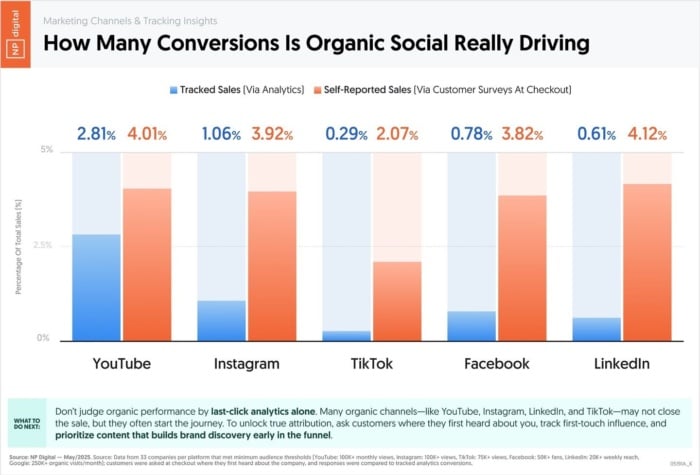
How YouTube’s Algorithm Can Find Your Customers for Free
how-to-guide
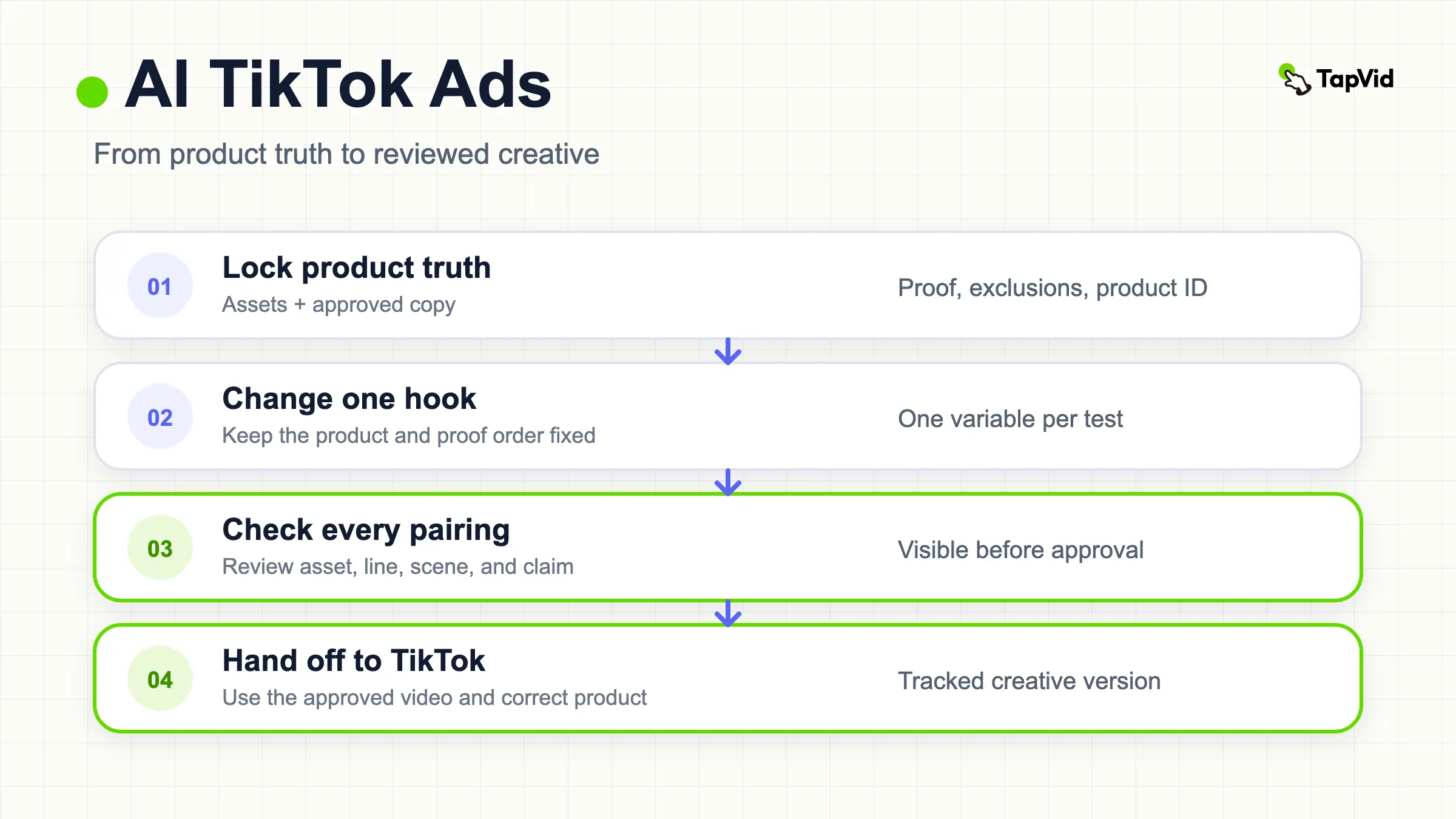
Is AI Making It So Anyone Can Run Effective TikTok Ads?
analysis

Why YouTube Views Are Higher: The Impact on Your EMV and ROI
analysis

Creating a Video Series: Why Your Business Needs One
how-to-guide

How Dijksman Communicatie chose 11 creators for BYD with Stellar
analysis